EMS Body Sculpting Machine: A B2B Buyer’s Guide to EMS vs. HIFEM, Evidence, and Sourcing
EMS body sculpting is one of the fastest-growing categories in non-invasive body contouring, and one of the most confusing to buy. Supplier catalogs use EMS, EMS sculpting, HIFEM, electromagnetic muscle stimulation, and similar labels almost interchangeably, and many listings borrow results from famous branded systems. For a clinic owner, distributor, or brand builder, that confusion can turn into overpaying, overpromising, or buying a machine that cannot do what its marketing implies.
This guide is written for B2B buyers. It explains the difference between EMS and HIFEM, what the research actually covers, which specifications matter, and how to source and market the equipment responsibly. Our EMS category collects our related guides.
What Is an EMS Body Sculpting Machine?
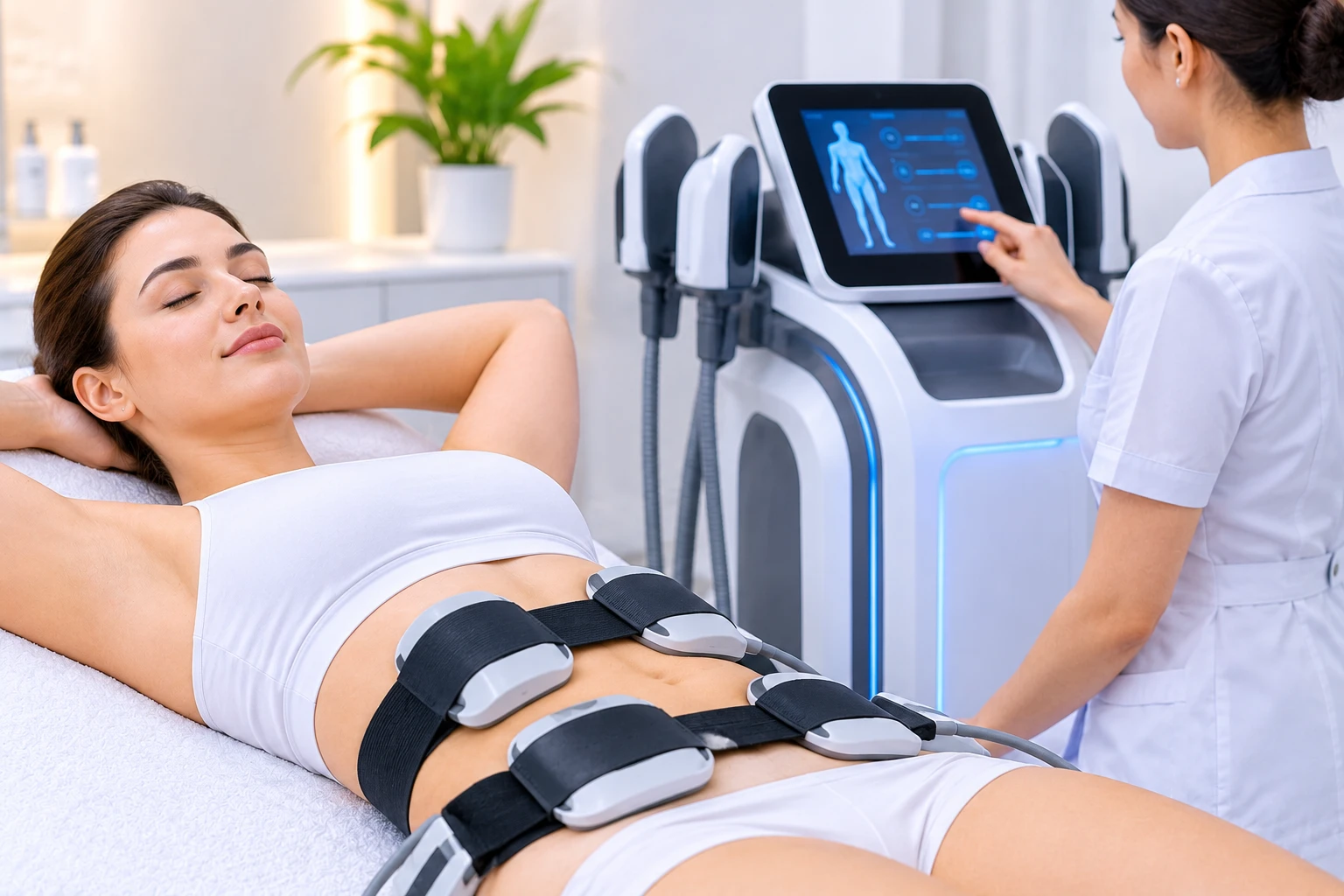
EMS stands for electrical muscle stimulation. An EMS machine sends electrical impulses through electrodes or applicator pads placed on the skin, which cause muscles to contract. In aesthetic settings the treatment is positioned around toning, strengthening, and body contouring support for areas such as the abdomen, glutes, thighs, and arms.
EMS has a long history in physiotherapy, and many aesthetic machines build on that foundation with larger applicators, programmable intensity, and sometimes added features such as RF heating. For buyers, the practical question is not whether the term sounds scientific. It is what the specific machine delivers, how it is built, and what evidence applies to it.
EMS vs. HIFEM: The Distinction Buyers Must Understand
HIFEM stands for high-intensity focused electromagnetic energy. It uses a magnetic field generated by an applicator to stimulate muscle contractions, rather than passing current through skin electrodes. The technology was introduced for body contouring in 2018 and became widely known through the Emsculpt brand.
The two are related in purpose but different in mechanism, and the difference matters in three ways:
When a supplier calls a machine EMS sculpting, ask exactly how it generates muscle stimulation, what the applicator type is, and what evidence and certification apply to that specific model.
What the Research Shows
Published work on electromagnetic body contouring is meaningful but narrower than marketing suggests. A systematic review of HIFEM with and without radiofrequency assessed outcomes for noninvasive body contouring and reported improvements in measured muscle and fat thickness in abdominal treatments, no reported changes in body weight, high patient satisfaction in studies that measured it, and two studies reporting marginal or no benefit. A separate review of electromagnetic treatment combined with radiofrequency noted that the studies it identified all used the same branded device.
Three takeaways for buyers:
- The evidence supports the general concept of electromagnetic muscle stimulation for contouring, mostly in specific branded systems
- Results are modest and vary by person, and the treatment is not a weight loss method
- Evidence for a generic machine, especially one using electrical rather than electromagnetic stimulation, should not be assumed from these studies
This is why accurate claims and honest specifications are your best protection.
How EMS and Related Machines Work
Applicators and Output
Most machines include multiple applicators sized for different body areas. Applicator size, contact design, and the number of independent channels affect coverage and comfort. Ask about maximum output, adjustable intensity, and pulse programs.
Treatment Programs
Programs vary in frequency, pulse pattern, and duration. Good machines let practitioners set intensity per area and adjust during a session.
Combination With RF and Other Modules
Some machines pair muscle stimulation with RF heating or add vacuum, LED, or cooling modules. Combinations can widen your menu, but each module must be well engineered and certified. For background on RF, see our HIFU vs RF guide.
Types of EMS Body Sculpting Machines
| Type | Main mechanism | Typical positioning | Main buying consideration |
|---|---|---|---|
| Electrode or pad-based EMS | Electrical impulses through skin pads | Toning and body contouring support | Channel count, pad quality, intensity control |
| Electromagnetic (HIFEM-type) | Magnetic field applicators | Premium body sculpting | Evidence and certification for the exact model |
| EMS plus RF | Muscle stimulation with heating | Combined tone and contour menu | Separate specs and certification per module |
| Multifunction body machines | EMS with vacuum, LED, or cavitation | Wider menu in one unit | Quality of each added module |
Specifications That Matter
Output and Channels
Ask for maximum intensity, number of independent channels or applicators, and how output is controlled. Stable, adjustable output matters for comfort and consistency.
Applicator Quality
Check applicator materials, cable durability, and replacement cost. Pads and applicators see the most wear.
Safety Features
Ask about overload protection, emergency stop, and treatment time limits. Safety design should never be the place a supplier cuts cost.
Software and Presets
Clear presets, timers, and a usable interface reduce errors and training time.
Cooling and Build
Housing, cooling, and component quality affect service life under daily clinical use.
Certification and Compliance
Confirm certificates for the exact model and configuration, and understand what intended use they cover. Do not describe any machine as FDA cleared or approved unless you can document that exact clearance for that exact model, and do not borrow the clearance of a branded system. For machines combining several functions, ask for coverage of each module. Our guide on why CE, FDA, and ISO certifications matter explains what to request and how to verify it.
Safety and Contraindications
Muscle stimulation treatments have well-known cautions. Typical contraindications include implanted electronic devices such as pacemakers, metal implants in or near the treatment area, pregnancy, and certain medical conditions. Requirements differ by device, so follow the manufacturer’s instructions and local regulations, and build client screening into your intake process. Train staff accordingly.
Who Buys This Equipment and Why
Clinics and Studios
EMS appeals to clients who want toning and contouring support without surgery or downtime. It fits clinics that want a body service that pairs well with RF, cavitation, or roller treatments. See our body roller machine guide for complementary services.
Distributors
Distributors use EMS to cover a high-interest category with multiple price tiers. Train sales teams to explain the EMS and HIFEM distinction so customers are not misled by borrowed claims.
Private Label Brands
The category is crowded, so differentiation depends on build quality, applicator design, software, support, and honest positioning. Our OEM vs ODM guide explains which manufacturing model suits your stage.
Building the Business Case
Landed Cost and Running Cost
Compare total landed cost: machine, shipping, duties, training, and replacement applicators or pads. Add consumables per treatment.
Pricing and Session Plans
Body sculpting is usually sold as a series of sessions. Model price per session, number of sessions per client, and weekly capacity per machine to estimate break-even. Use conservative demand estimates.
Staff Training
Train staff on applicator placement, intensity ramping, client screening, and contraindications. Poor technique affects comfort and results.
Vetting the Manufacturer
Verify the factory address and registration, ask for references, request certification documents, and request a sample or detailed live demonstration before a bulk order. Confirm MOQ, lead time, warranty, spare parts supply, and payment terms in writing. Our guide to finding a reliable beauty equipment manufacturer covers the full process, and the common mistakes new beauty equipment businesses make explains why choosing on price alone is risky. For where this category sits in the market, see our overview of 2026 beauty equipment trends.
Marketing Responsibly
Keep claims accurate:
- Describe the treatment as supporting muscle toning and contouring, not weight loss
- Avoid guaranteed results, and note that outcomes vary by person
- Do not use another brand’s name, clearance, or study results for your machine
- Do not call a generic EMS machine HIFEM unless the mechanism genuinely is electromagnetic and you can document it
- Use phrases such as designed to and may support instead of guarantees
Common Mistakes to Avoid
Treating EMS and HIFEM as the Same Thing
The difference affects evidence, price, and claims. Confirm the mechanism for every quote.
Borrowing Branded Study Results
Results for one branded system do not validate a different machine. Judge yours on its own specifications and certification.
Overpromising Fat Loss
Body contouring is not a weight loss treatment, and marketing that implies otherwise invites complaints and regulatory problems.
Skipping Client Screening
Contraindications matter. A clear intake process protects clients and your business.
Skipping the Demonstration
Request a sample or live demonstration and test every applicator and program before ordering in volume.
Frequently Asked Questions
Conclusion
EMS body sculpting offers clinics and brands a high-interest, non-invasive category, but it rewards careful buyers. Confirm the mechanism, separate EMS from HIFEM, verify certification for your exact model, vet the manufacturer, and keep your marketing honest about what the equipment can and cannot do.
Ready to source EMS equipment for your clinic or brand? Contact our team for specifications, samples, and a quote.