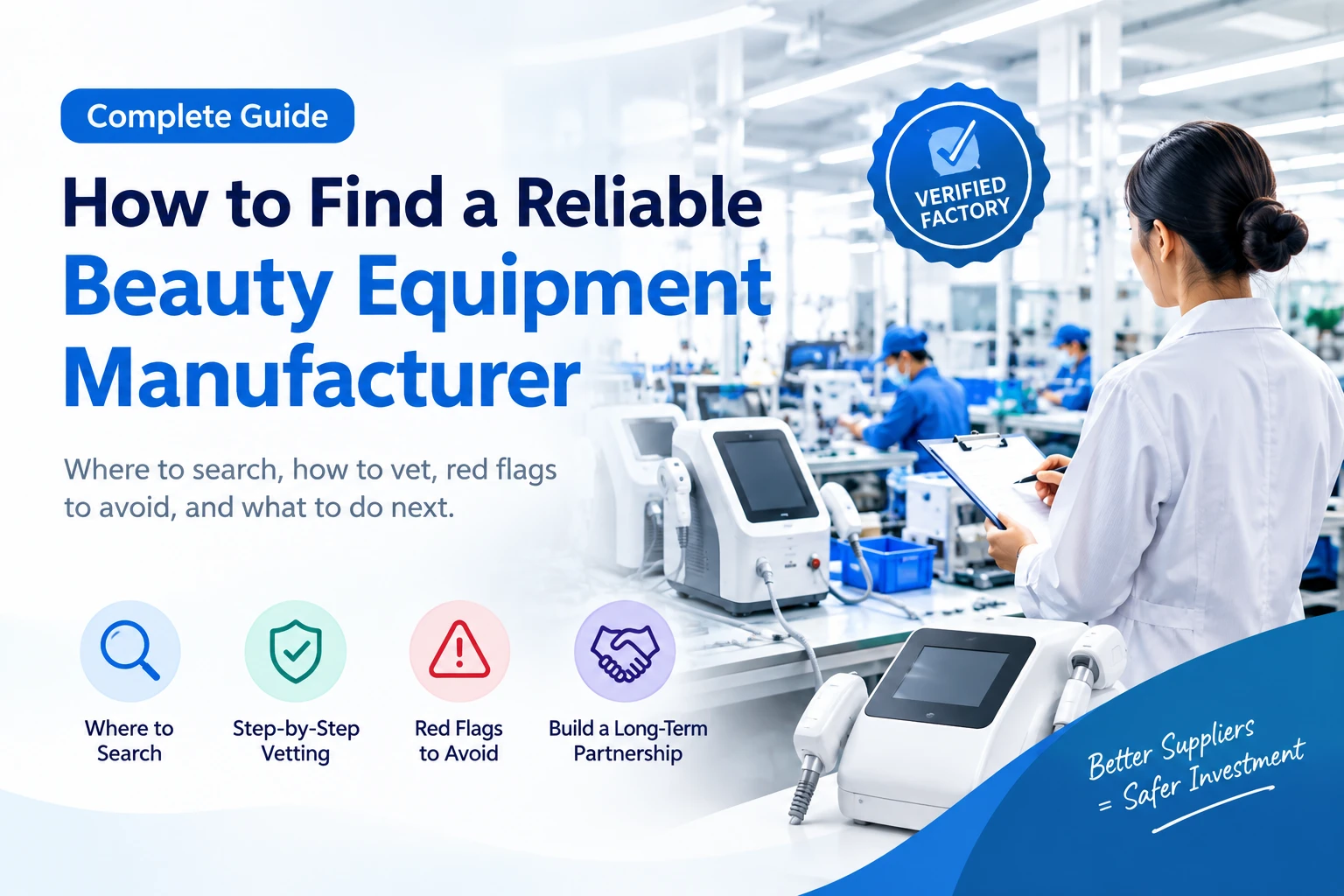
How to Find a Reliable Beauty Equipment Manufacturer
Finding a good product is only half the job. The other half is finding a manufacturer you can actually trust to deliver it, support it, and stand behind it after the sale. With thousands of listings on B2B platforms making nearly identical claims, telling a genuine factory apart from a reseller, a trading company, or a risky supplier takes a specific process, not a gut feeling.
This guide walks through where to search, how to vet a manufacturer step by step, the red flags that should make you walk away, and what to do once you’ve found a supplier worth working with long term.
Why Choosing the Right Manufacturer Matters More Than the Product
It’s tempting to focus entirely on the machine: its features, its price, its specs. But a beauty equipment purchase isn’t a one-time transaction. You’ll likely need spare parts, consumables, software updates, and technical support over the life of the machine, and possibly a second or third order as your business grows.
A manufacturer who cuts corners on materials, certifications, or communication creates problems that surface after you’ve already paid, shipped, and started marketing the equipment to clients. At that point, your options are limited and expensive. The manufacturer relationship, not just the product, is what determines whether your investment holds up over one year, three years, or five.
This matters even more if you’re building a private label or custom brand, since you’re staking your own name on a product someone else builds.
Understanding the Different Types of Suppliers
Before you start vetting, it helps to know what kind of supplier you’re actually talking to, since the term "manufacturer" gets used loosely online.
Real Manufacturers
These companies own or directly operate the factory. They can usually answer detailed technical questions, show you the production floor, and offer the most flexibility on customization and pricing, since there’s no middleman markup.
Trading Companies
Trading companies buy from factories and resell to international buyers. They can be useful if they specialize in your product category and speak your language fluently, but you’re paying a markup, and their knowledge of the actual manufacturing process is often secondhand.
Sourcing Agents
An agent works on your behalf to find and vet factories, often for a fee or commission. This can save time if you’re sourcing at scale or don’t have experience vetting suppliers yourself, but the agent’s incentives should be checked too, since some earn commission from the factory rather than from you.
Resellers and Dropshippers
Some online listings are neither the factory nor a dedicated trading company, just an individual reseller. These typically offer the least transparency, the weakest support, and the least ability to customize or verify certifications directly.
Knowing which type you’re dealing with changes what questions are worth asking and how much scrutiny is appropriate.
Where to Look for Beauty Equipment Manufacturers
B2B Platforms
Sites like Alibaba, Global Sources, and Made-in-China list large numbers of manufacturers, and most let you filter by verified supplier status, years in business, and certifications. Treat these filters as a starting point, not proof, since verification badges vary in how strictly they’re checked and don’t replace your own due diligence.
Trade Shows
Industry trade shows let you see equipment in person, speak directly with factory representatives, and compare several manufacturers side by side in one trip. This is often the fastest way to judge build quality and communication style before committing to anything. It also lets you build a personal relationship with the people you’ll be emailing for the next several years.
Direct Manufacturer Websites
Some manufacturers sell directly rather than only through marketplaces. A direct website can mean lower prices and more customization options, but it also means you’re responsible for more of the vetting yourself, since there’s no platform layer doing any initial checking.
Referrals and Industry Networks
Ask other clinic owners, distributors, or industry contacts who they’ve worked with. A referral from someone who has actually placed an order, received the shipment, and used the after-sales support carries more weight than any listing or review you’ll find online, since online reviews are easy to fabricate.
Industry Associations and Directories
Some regions have beauty equipment manufacturing associations or government-backed export directories that list vetted companies. These lists aren’t a guarantee of quality, but they add one more layer of verification beyond a single marketplace listing.
How to Vet a Beauty Equipment Manufacturer: A Step-by-Step Process
Step 1: Verify the Factory Is Real
Ask for the factory’s business registration number, physical address, and photos or video of the production floor. A manufacturer willing to do a live video call showing the actual facility, not a stock video, is a strong signal. Be cautious of suppliers who only provide stock photos, generic renderings, or avoid specific questions about their location.
You can also cross-check the business registration against your country’s or the supplier’s country’s public business registry, where available, to confirm the company legally exists and matches the name on your contract.
Step 2: Check Certifications Match the Exact Product
Ask for CE, FDA, or ISO documentation and confirm it names the specific model you’re considering, not just a similar product in their broader catalog. Certifications apply to specific models and specifications, so a certificate for a different variant doesn’t cover the unit you’re ordering. Our guide on why CE, FDA, and ISO certifications matter explains exactly what to request and how to verify it independently.
Step 3: Request a Sample or Live Demonstration
Photos and spec sheets only tell part of the story. A sample unit, or at minimum a detailed live video demonstration, lets you judge build quality, noise level, handpiece feel, and how the software actually performs, not just how it’s described in a listing. If a full sample isn’t practical for your order size, ask for a recorded demo covering every function you plan to use.
Step 4: Ask About MOQ, Lead Time, and Payment Terms
Get these in writing before you commit: minimum order quantity, expected production lead time, deposit and balance payment structure, accepted payment methods, and what happens if the shipment is delayed. Vague or shifting answers to these specific questions are one of the clearest warning signs in early conversations.
Step 5: Understand Their Manufacturing Model
Find out whether they’re offering OEM, ODM, or simply reselling someone else’s product under their own name. This changes what customization is possible, who owns the design files and tooling, and whether other buyers might be selling an identical device under a different brand. See our OEM vs ODM guide if you’re unsure which model fits your plans and budget.
Step 6: Ask About After-Sales Support
Find out the warranty period, how spare parts are supplied and shipped, typical response time for technical issues, and whether support is available in your language and time zone. A manufacturer who can’t answer these clearly during the sales process almost certainly won’t improve once your payment has cleared.
Step 7: Review the Contract Carefully
Before paying anything, get a written contract or proforma invoice covering the exact specifications, quantity, price, payment terms, delivery date, and what happens in case of defects or delays. Verbal promises in a chat window are not enforceable. If the manufacturer resists putting agreed terms in writing, treat that as a serious warning sign rather than a formality to skip.
Step 8: Plan for a Small First Order
Where possible, start with a smaller trial order before committing to a large bulk purchase, even if the per-unit price is less favorable. This limits your exposure while you confirm quality, communication, shipping reliability, and support actually match what was promised.
Red Flags to Watch For
- Prices far below the market average with no clear explanation for the gap
- No verifiable factory address, or reluctance to do a live video call
- Certificates that don’t match the specific model you’re ordering
- Pressure to pay in full upfront with no written contract or clear terms
- Copied product descriptions or photos appearing across multiple "different" suppliers
- Vague or evasive answers to direct questions about MOQ, lead time, or support
- No willingness to provide a sample or detailed demonstration
- Inconsistent company names across the website, invoices, and contracts
Any one of these alone isn’t automatically disqualifying, but more than one together is a strong reason to keep looking. This overlaps with several of the common mistakes new beauty equipment businesses make, and catching them early is far cheaper than catching them after a shipment arrives.
Questions to Ask Before You Order
- Can you provide certification documents for this exact model, with the model number visible?
- Can I see a live demo, or receive a sample, before committing to a bulk order?
- What is the MOQ, and is it negotiable for a first or trial order?
- What is the production lead time, and what happens if it’s delayed?
- What warranty do you offer, and how do I request spare parts after the warranty period?
- Is this an OEM or ODM product, and what can I customize?
- Can you share references from other buyers I can contact directly?
- Who owns the design files and tooling if I request custom changes?
- What are the full payment terms, and what payment methods do you accept?
- What happens if the equipment arrives damaged or doesn’t match the agreed specifications?
Write down the answers as you go. A manufacturer’s willingness to answer clearly and consistently across several conversations tells you as much as the answers themselves.
Comparing Manufacturer Types
| Supplier type | Pros | Watch out for |
|---|---|---|
| Verified B2B platform listing | Easy to compare, some vetting done | Verification badges vary in strictness |
| Direct manufacturer website | Lower price, more customization | More vetting responsibility on you |
| Trading company | Language support, smaller order flexibility | Markup, secondhand production knowledge |
| Sourcing agent | Saves time, local expertise | Check who pays their commission |
| Trade show contact | See product in person, direct relationship | Requires travel and time |
| Referral from industry contact | Real-world track record | Limited to their specific experience |
Understanding Costs Beyond the Unit Price
A manufacturer’s quoted unit price is rarely the full cost of getting equipment into your hands and ready to use. Before comparing suppliers on price alone, ask about or budget for:
- Shipping and freight, which varies significantly by method and destination
- Import duties and taxes, which depend on your country’s classification of the product
- Customs clearance and documentation fees
- Installation, calibration, or setup support, if not included
- Training for you or your staff
- Consumables and spare parts needed for ongoing use
A supplier with a slightly higher unit price but clear, all-inclusive terms can end up cheaper and far less stressful than the lowest quote on the page.
Building a Long-Term Relationship With Your Manufacturer
Once you’ve found a supplier that passes vetting, treat the relationship as ongoing rather than transactional. Manufacturers are more likely to prioritize your orders, flag upcoming price changes in advance, and go out of their way on support issues for buyers who communicate consistently and pay on time. If you plan to reorder or expand your product line, ask early about volume discounts, new product previews, and whether they’re open to further customization as your brand grows.
Frequently Asked Questions
How do I know if a beauty equipment supplier is legitimate?
Verify their factory address and business registration, check that certifications match the exact model, and request a sample or live demo before ordering. Be cautious of suppliers who avoid direct questions or can’t produce documentation on request.
What questions should I ask a beauty equipment manufacturer?
Ask about certifications for the specific model, MOQ, lead time, payment terms, warranty, spare parts, and whether the product is OEM or ODM. Clear, specific, and consistent answers are a good sign; vague or shifting ones are not.
Is it safe to buy beauty equipment from Alibaba?
It can be, since many legitimate manufacturers list there alongside trading companies and resellers. The platform’s verification badges don’t replace your own checks, so confirm certifications and request a sample regardless of where you find the supplier.
Should I visit the factory before placing a large order?
An in-person visit is the most thorough check available, especially for a large first order. A detailed live video call showing the production floor is a reasonable alternative when travel isn’t practical.
What's the difference between a manufacturer, a trading company, and a sourcing agent?
A manufacturer owns or operates the factory directly. A trading company buys from factories and resells to you, usually with a markup. A sourcing agent works on your behalf to find and vet suppliers, often for a fee. Each has different pros and cons depending on your order size and experience level.
How much should I order on my first purchase?
Where the MOQ allows it, start smaller than you might for a repeat order. A trial run costs more per unit but limits your exposure while you confirm quality, shipping reliability, and support actually match what was promised.
What should be included in a contract with a beauty equipment manufacturer?
At minimum, the contract should specify exact product specifications and model number, quantity, unit price, total price, payment terms and schedule, delivery date, and what happens in the case of defects, delays, or disputes.
Conclusion: Vet the Manufacturer as Carefully as the Product
The best beauty equipment purchase starts with the right manufacturer, not just the right machine. Understand what type of supplier you’re dealing with, verify the factory and its certifications, request a sample, get every term in writing, and start with a trial order where possible. A little extra diligence upfront saves far more time, money, and stress than fixing problems after the shipment has already arrived.
Looking for a verified manufacturing partner? Contact our team for certifications, samples, and a quote.