OEM vs ODM Beauty Equipment: Which Manufacturing Model Is Right for Your Brand?
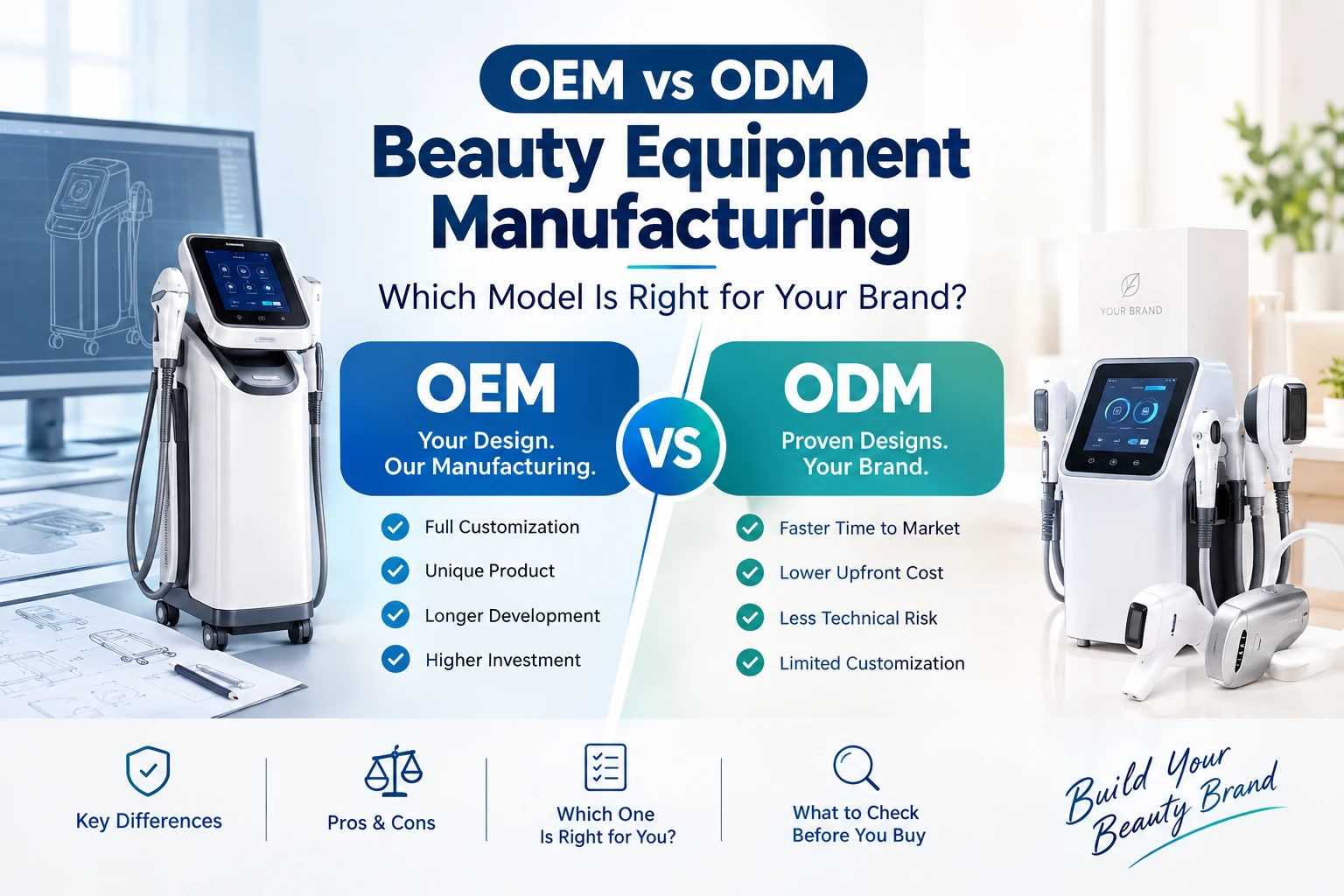
If you’re planning to launch your own beauty device line, one of the first decisions is how the product gets made. Most brands work with a beauty equipment manufacturer under one of two models: OEM or ODM. The difference affects your budget, your timeline, how unique your product is, and how much control you keep over the design.
This guide explains OEM vs ODM beauty equipment, compares the two side by side, and helps you decide which fits your brand.
What Is OEM in Beauty Equipment?
OEM stands for Original Equipment Manufacturer. With OEM beauty equipment, you bring the design and specifications, and the factory builds the product to your requirements.
Depending on the project, you may provide:
- Technical drawings or a detailed product specification
- Your own housing design, handpiece design, or software interface
- Branding, packaging, and user manuals
The factory’s job is production. It manufactures to your spec and quality standards, and the finished machine carries your brand.
What Is ODM in Beauty Equipment?
ODM stands for Original Design Manufacturer. With ODM beauty equipment, the manufacturer has already designed and engineered the device. You choose a proven model from its range, then customize what you’re allowed to change, such as the logo, color, packaging, and sometimes the handpieces or interface language.
This is often called private label or white label beauty equipment, because you sell a factory-developed device under your own name.
OEM vs ODM Beauty Equipment: Key Differences
| Factor | OEM | ODM |
|---|---|---|
| Who designs the product | You | The manufacturer |
| Level of customization | High | Limited to moderate |
| Development time | Longer | Shorter |
| Upfront cost | Higher (R&D, prototyping, tooling) | Lower |
| Product uniqueness | Exclusive to your brand | May be similar to other brands’ products |
| Minimum order quantity | Often higher | Often lower |
| Technical expertise needed | Significant | Minimal |
| Best for | Established brands with R&D capacity | Startups and fast market entry |
Actual MOQs, costs, and lead times vary by factory and product, so always confirm them in writing.
Pros and Cons of Each Model
OEM Pros and Cons
Pros: You control the design, features, and performance, and a truly differentiated product is easier to protect and market. There is no risk of a competitor selling the same machine under a different logo.
Cons: Development takes longer and costs more. You need engineering knowledge or a design partner, and a mistake in the specification becomes your problem, not the factory’s.
ODM Pros and Cons
Pros: You get to market faster, with lower upfront investment and less technical risk. The platform is already tested, so it suits brands validating a new market.
Cons: Your customization options are limited. Other buyers may sell the same core device, which makes differentiation harder, and you depend on the manufacturer’s design roadmap.
Which Manufacturing Model Is Right for Your Brand?
Choose OEM If You Have a Unique Product Vision
OEM makes sense when you have a specific technology or design in mind, a budget for development and tooling, and a long-term plan to build a distinctive brand. It also suits established clinics or distributors moving into their own product line.
Choose ODM If You Want to Launch Quickly
ODM is usually the better fit for new brands testing demand, distributors who want a private label line without an engineering team, and businesses that need to start selling within weeks rather than months.
Consider a Hybrid Approach
Many brands start with an ODM platform, then commission custom changes (a new applicator, housing, or software) once sales justify the investment. Ask potential manufacturers whether they support this "ODM plus customization" path.
What to Check Before Choosing a Beauty Equipment Manufacturer
Whichever model you choose, verify these points before placing an order.
Certifications and Compliance
Check that the device holds the certifications your target market requires, such as CE, FDA registration or clearance, and ISO quality standards. With ODM in particular, confirm that the certificate applies to the exact model you’re buying and that you’re allowed to use it under your brand. Our guide to why CE, FDA, and ISO certifications matter covers this in more detail.
MOQ, Pricing, and Lead Time
Ask for a clear quote covering unit price, MOQ, sample cost, production lead time, and payment terms. Beware of prices far below market, which often signal cut corners.
Intellectual Property and Tooling Ownership
For OEM projects, put in writing who owns the design files, molds, and tooling. For ODM, find out whether the manufacturer sells the same model to others.
Warranty, Spare Parts, and After-Sales Support
Beauty devices need handpieces, consumables, and technical support over their lifetime. Confirm the warranty period, spare parts availability, and how support requests are handled.
Avoiding these oversights is also one of the common mistakes new beauty equipment businesses make.
Frequently Asked Questions
Is OEM or ODM cheaper for beauty equipment?
ODM is usually cheaper upfront because the design and engineering are already done. OEM can pay off over time if a unique product lets you charge more or sell in volume.
Can I use my own brand name and logo with ODM?
Yes. Private label branding is one of the main reasons brands choose ODM. Confirm what can be customized, such as the logo, colors, packaging, and manuals.
What is the difference between OEM and private label beauty devices?
Private label usually means an ODM arrangement: a ready-made product sold under your brand. OEM means the product is built to your own design.
Is a lower MOQ available with ODM?
Often, yes, because the factory already has the design and components. Exact MOQs depend on the manufacturer and the device.
Do OEM and ODM beauty devices need their own certifications?
The device must meet the regulations of the market where you sell it. Ask the manufacturer for test reports and certificates, and confirm they cover your specific model.
Conclusion: Match the Model to Your Stage
OEM gives you control and exclusivity at the cost of time and investment. ODM gives you speed and lower risk with less differentiation. The right choice depends on your budget, timeline, and long-term brand goals.
Ready to discuss your project? Contact our team for samples, MOQ details, and a quote for your beauty equipment line.