
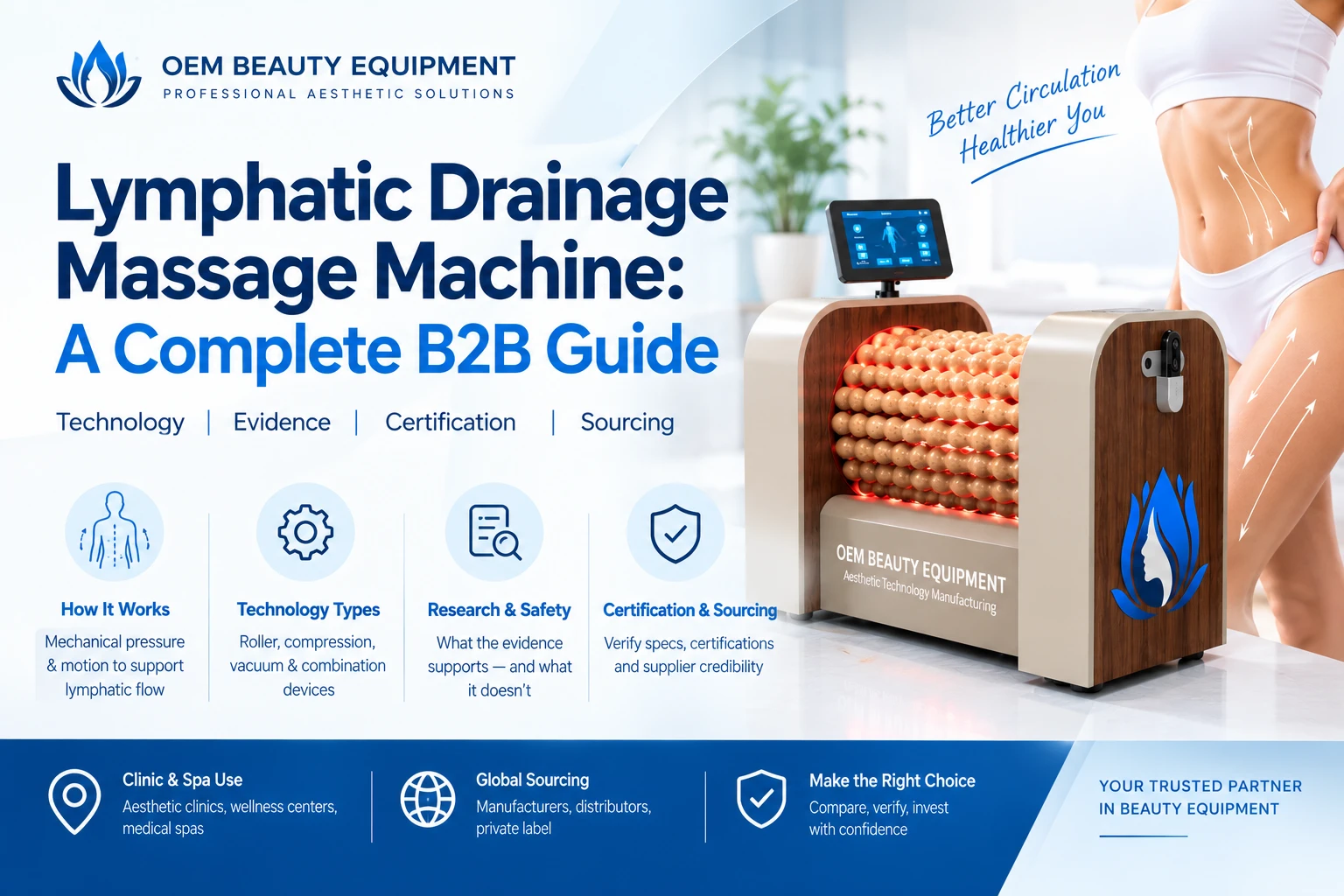
Lymphatic Drainage Massage Machine: A Complete B2B Guide
Search interest in lymphatic massage equipment is some of the strongest in the body contouring and wellness category, and it is also some of the most crowded with vague product claims. For a clinic owner, distributor, or private label brand, that combination makes sourcing harder than it looks: the same search terms return handheld tools, motorized rollers, compression systems, and multi-function machines, all described in similar language.
This guide is the pillar overview for that category. It explains what lymphatic drainage massage machines are, the main technology types, what the research does and does not support, and how to evaluate, certify, and source them as a business decision. It also links to our more focused guides on specific device types.
What Is a Lymphatic Drainage Massage Machine?
A lymphatic drainage massage machine is a device that applies mechanical pressure and motion to the body in patterns intended to support the movement of lymphatic fluid. The category covers a wide range of equipment, from small handheld units to full-body professional systems, and it is used in aesthetic clinics, wellness centers, and medical spas.
The terms people use for this equipment overlap heavily. Lymphatic massage machine, lymphatic massager, and lymph drainage machine are often used interchangeably in supplier catalogs, even when the devices behind them differ in design and capability. Treat the name as a starting point for questions, not a specification.
How Lymphatic Drainage Massage Machines Work
The Mechanical Principle
The lymphatic system has no central pump like the heart. Lymph moves through the body mainly through muscle contraction, breathing, and external pressure. Mechanical devices are designed to supply that external pressure in controlled, repeatable ways, typically with directional motion toward lymph node regions.
Common mechanical elements include:
- Rolling motion from motorized rollers
- Compression applied in sequence along a limb or body area
- Suction or vacuum that lifts tissue into the mechanism
- Adjustable intensity and speed so practitioners can calibrate treatment
What the Research Shows
Mechanical approaches to lymphatic drainage have a real but still developing evidence base, mostly in clinical lymphedema management. A literature review in Cureus on mechanical lymphatic drainage found supporting evidence for the role of mechanical methods in supporting lymph formation and drainage, while noting that further research is needed to establish protocols and long-term outcomes. A separate study in the journal Lymphology examined a modified manual drainage technique with a rolling element and reported improvement in treated limbs over a six-week period in lymphedema patients.
Two points matter for buyers. First, this gives the general mechanical rationale some credibility, which separates this category from product types with almost no supporting research. Second, this work was done in clinical settings under professional protocols. It does not validate a specific commercial cosmetic device, and it should not be used to imply that your machine treats medical conditions.
Types of Lymphatic Drainage Massage Machines
Because the category is so broad, it helps to separate machines by mechanism before comparing prices.
Roller-Based Machines
These use motorized rollers that move across the skin. They are the most common type in aesthetic clinics and the most common in private label catalogs. Our guide to the lymphatic drainage roller machine covers this type in detail, and our guide to choosing a roller for lymphatic drainage explains how treatment area affects design.
Compression-Based Systems
These apply sequential pressure through inflatable chambers or sleeves, usually on the legs or arms. They work differently from rollers and are more common in wellness and recovery settings than in body contouring menus.
Vacuum and Suction-Assisted Machines
These lift a fold of tissue into the device, often combined with rolling. They sit between a basic roller and a multi-function machine in cost and complexity.
Combination Devices
Some machines add a light-based element to the mechanical action, such as red or infrared LEDs. These carry a higher cost and a more complex claims picture, covered in our guides to red light roller devices and infrared lymphatic massage rollers.
Comparison at a Glance
| Machine type | Core mechanism | Typical setting | Key buying consideration |
|---|---|---|---|
| Roller-based | Motorized rolling | Body contouring clinics | Roller quality and treatment area design |
| Compression-based | Sequential pressure | Wellness and recovery | Chamber count and pressure range |
| Vacuum-assisted | Suction plus rolling | Mid-range clinics | Suction control and comfort settings |
| Combination | Mechanical plus light | Premium positioning | Separate certification and claims for each component |
Lymphatic Massager vs. Lymphatic Drainage Massage Machine
Buyers often ask whether a lymphatic massager and a lymphatic drainage massage machine are the same thing. In supplier language they frequently are, but there is a useful working distinction:
- A lymphatic massager usually refers to a smaller, simpler device, sometimes handheld or single-area, often aimed at lower price points.
- A lymphatic drainage massage machine usually refers to a larger professional unit with more settings, attachments, or treatment zones.
This distinction is a convention, not a standard. Always request the actual specification, including treatment area, adjustable settings, and attachment list, rather than relying on which term appears in the listing.
Who Buys This Equipment
Clinics and Medical Spas
Clinics add this equipment to widen their treatment menu, serve wellness-minded clients, or offer a lower-complexity service next to energy-based treatments such as RF or HIFU. The lower training burden compared with energy-based devices is a practical advantage for smaller teams.
Distributors
Distributors use this category to bridge aesthetic and wellness customers. A tiered catalog, from simple units to multi-zone machines, lets you serve clinics at different budget levels. Your sales team needs to understand the real differences between tiers so they do not oversell.
Private Label Brands
For brands, the mechanical rationale and broad search demand make this an attractive category, but differentiation is hard because the core mechanism is fairly standardized across factories. Branding, positioning, and support carry much of the competitive weight.
What to Evaluate Before You Buy
Technical Specification
Request the full specification in writing: mechanism type, roller or chamber count, pressure and speed range, treatment areas the device is designed for, and any attachments. Marketing descriptions are not a substitute.
Certification and Compliance
This category makes functional claims about the lymphatic system, so certification deserves more scrutiny than for a purely cosmetic device. Confirm that certificates cover the exact model and configuration, and understand what claims they support. Our guide on why CE, FDA, and ISO certifications matter explains how to request and verify the documents. For combination devices, confirm coverage for each component separately.
OEM and ODM Options
If you plan to sell under your own brand, our OEM vs ODM guide explains the trade-offs. Because the core mechanism is standardized, ODM customization of an existing model is often the more practical route, but ask who owns the documentation that supports your marketing claims.
Manufacturer Verification
Given how much claim risk sits in this category, supplier credibility matters. A factory that overstates clinical benefits to close a sale passes liability to you. Our guide to finding a reliable beauty equipment manufacturer covers verifying factory status, requesting samples, and spotting red flags.
Building the Business Case
Cost Drivers
Unit cost generally scales with mechanism complexity: a simple roller costs less than a multi-zone machine, and a combination device costs more still. Build a landed cost model covering unit price, shipping, duties, training, and any consumables or replacement parts.
Pricing and Positioning
Wellness-oriented clients may accept a premium price for a service they perceive as therapeutic. That premium holds only when claims stay accurate and the client experience is good. Overclaiming to justify a high price tends to cost more in refunds and lost trust than it earns.
Staff Training
Staff should understand how the lymphatic system works at a basic level, which treatment directions are appropriate, and the contraindications that apply, such as certain medical conditions or recent surgery. Include training time and materials in your launch plan, not only the equipment price.
Marketing This Category Responsibly
Good practice for client-facing language:
- Describe the mechanical principle in general terms and state that the treatment is designed to support lymphatic fluid movement
- Avoid claims of detoxification, guaranteed swelling reduction, or treatment of medical conditions unless you hold specific clearance and evidence for those claims
- Keep mechanical and light-based claims separate for combination devices
- Use language such as designed to and may support rather than guarantees
This protects clients, keeps you aligned with advertising and medical device rules in most markets, and builds trust over the long run.
Common Mistakes to Avoid
Comparing Prices Before Comparing Mechanisms
Two quotes for a lymphatic massage machine can describe entirely different products. Match mechanism and treatment area first, then compare prices.
Overclaiming Clinical Benefits
Borrowing lymphedema research to promise therapeutic outcomes from a cosmetic device is the biggest single risk in this category.
Skipping Sample Testing
Request a sample or a detailed live demonstration before a bulk order, and test every function the listing describes.
Ignoring Supplier Verification
A low price from an unverified supplier can become expensive through failed certification, poor support, or non-delivery. See our guide on common mistakes new beauty equipment businesses make.
Frequently Asked Questions
What is a lymphatic drainage massage machine used for?
It applies controlled mechanical pressure designed to support lymphatic fluid movement. Clinics use it in wellness and body contouring treatments, often to address the appearance of puffiness and to complement other services.
What is the difference between a lymphatic massager and a lymphatic drainage massage machine?
Suppliers often use the terms interchangeably. In practice, a massager usually means a smaller or simpler device, while a drainage massage machine usually means a larger professional unit with more settings or attachments. Confirm the specification either way.
Is there research behind lymphatic drainage machines?
Yes, mainly in clinical lymphedema management, where mechanical approaches have supporting studies. That research supports the general mechanical rationale but does not prove outcomes for a specific commercial cosmetic device.
Can I claim my machine treats lymphedema?
Only if you have the specific regulatory clearance and clinical evidence for that claim. Otherwise, keep marketing language to general wellness and appearance support.
What certifications should I check?
Confirm certificates for the exact model and configuration, and understand which claims they support. For combination devices with a light component, check each component separately.
Can this equipment be customized for my brand?
Yes. Many manufacturers offer OEM or ODM customization, including branding, packaging, and sometimes attachment configuration. Confirm MOQ and certification transferability for customized orders.
How do I choose between a roller, compression, and vacuum-assisted machine?
Start from your treatment menu and client demand. Rollers suit body contouring menus, compression systems suit recovery and wellness, and vacuum-assisted machines sit in between. Request samples if you are unsure.
Conclusion
Lymphatic drainage massage machines combine strong search demand, a credible mechanical rationale, and a high level of claim risk. For B2B buyers, the path is consistent: define the mechanism you actually need, request full specifications, verify certification for the exact model, vet the manufacturer, and keep your marketing grounded in what the evidence supports.
Ready to source equipment for your clinic or brand? Contact our team for specifications, samples, and a quote.