
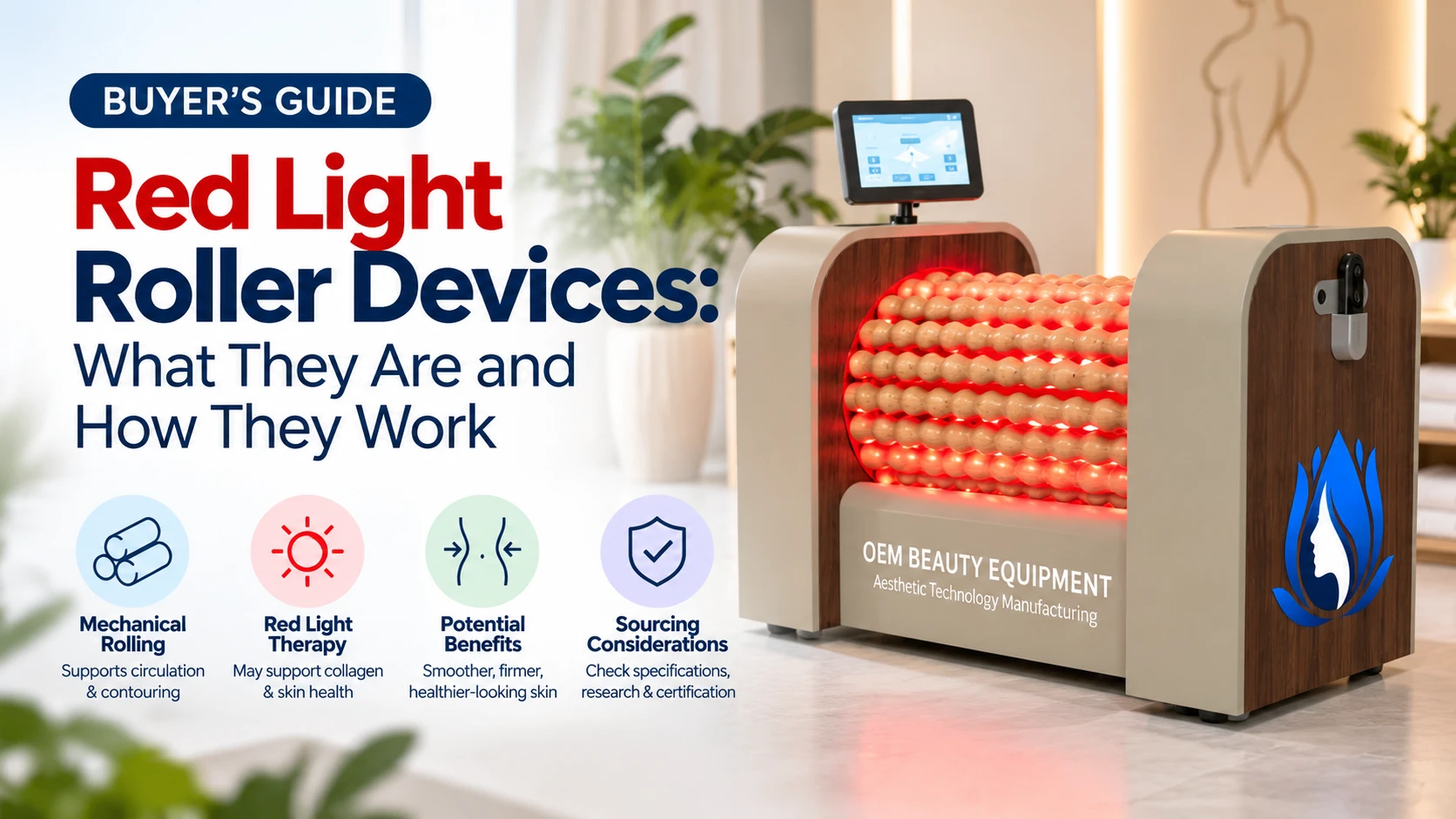
Red Light Roller Devices: What They Are and How They Work
Red light roller devices sit at the intersection of two established beauty equipment categories: mechanical roller massage and red light therapy. Individually, both technologies have been covered extensively—roller massage for body contouring and lymphatic support, and red light therapy for skin and tissue benefits. Combined into a single device, they’re marketed as offering both at once.
For a B2B buyer, the question isn’t whether either technology has merit on its own, it’s whether the combination device you’re sourcing genuinely delivers both, and how to verify that before you commit to an order.
This guide covers what a red light roller device actually is, how the two technologies work together mechanically, what the research supports, and how to evaluate and source this category responsibly.
What Is a Red Light Roller?
A red light roller is a body or facial contouring device that combines motorized rolling massage with an embedded red light-emitting component, typically LEDs built into the roller head or housing. The device applies mechanical pressure and motion to the skin while simultaneously exposing the treated area to red light, generally in the 620–680 nanometer wavelength range associated with red light therapy more broadly.
This is a specific case of the combination device format covered in more general terms in our earlier guide on infrared lymphatic massage rollers. The core principle is the same: two distinct mechanisms, mechanical and light-based, delivered through one device, which means both the hardware verification and the marketing claims deserve separate, careful attention.
How Red Light Roller Devices Work
The Mechanical Component
The rolling element works the same way as other roller-based body equipment covered throughout this series: motorized rollers move across the skin’s surface, applying pressure and motion intended to support smoothing, firming, and lymphatic-style drainage, depending on how the specific device is designed and positioned.
The Red Light Component
Red light therapy, researched under the broader term photobiomodulation, involves exposing skin to light in the red wavelength range, generally cited as 620–680 nanometers in clinical literature, distinct from near-infrared wavelengths (roughly 760–1100 nanometers) used in some adjacent devices. A peer-reviewed review of photobiomodulation in dermatology describes red and near-infrared light as working through photochemical effects at the cellular level, with research exploring applications in collagen stimulation, inflammation response, and general skin health, generally delivered through dedicated LED devices studied independently of simultaneous mechanical massage.
What Happens When the Two Are Combined
This is the point worth being precise about, the same way it mattered for infrared lymphatic rollers. The research base for red light therapy’s cellular-level effects is genuine and substantial. The research base specifically testing a combined roller-and-red-light device, as opposed to a standalone LED panel or mask, is considerably thinner. This doesn’t mean combination devices don’t work as intended, it means the specific claim “this roller-plus-red-light device has been clinically proven to deliver combined benefits” generally overstates what’s been directly tested, even if each individual component draws on real research in its own right.
3D Roller Body Massager: A Related but Distinct Category
The term “3D roller body massager” shows up frequently alongside red light roller products, and it’s worth clarifying the distinction for sourcing purposes.
“3D” in this context typically refers to the roller’s range of motion or the multi-directional, multi-angle design of the roller heads, rather than any light-based or energy-based technology. A 3D roller body massager may or may not include a red light component; the “3D” designation specifically describes the mechanical roller engineering, often marketed as providing more thorough or contoured coverage than a single-axis roller.
For buyers, this means a product listed as a “3D roller body massager” needs the same specification-level scrutiny as any other category in this series: request details on whether it includes a light-based component at all, and if so, confirm the wavelength and specification separately from the mechanical “3D” rolling claims.
Roller Body Massager vs. Red Light Roller: Comparing the Categories
Evaluate the technical, operational, and claims differences between standard mechanical rollers and red light combination equipment:
| Factor | Standard Roller Body Massager | Red Light Roller |
|---|---|---|
| Core mechanism | Mechanical rolling only | Mechanical rolling + red LED light (620–680 nm) |
| Technical complexity | Lower | Moderate (integrated light source & controls) |
| Manufacturing cost | Lower base tooling and assembly | Higher, reflecting the added optical component |
| Research basis | Limited aesthetic-specific research | Strong general photobiomodulation research; limited on combination format specifically |
| Typical positioning | General body contouring, firming | Combined contouring and skin/tissue benefit positioning |
| Claims risk | Lower (if marketed conservatively) | Higher (requires separating mechanical vs. light claims) |
Evaluating a Red Light Roller as a Buyer
Requesting the Light Specification
Before accepting any price premium associated with the “red light” label, request the specific LED wavelength range and output specification from the manufacturer. A verified red light component in the clinically relevant range justifies the added cost and marketing claim; an unspecified or unverifiable “red light” feature does not.
Confirming Certification for Both Components
As with other combination devices in this series, a red light roller may need certification coverage for the mechanical rolling function and the light-emitting element separately. Our guide on why CE, FDA, and ISO certifications matter explains how to request this documentation; for this category, ask specifically whether the light source has been independently assessed, not just the device as a general consumer product.
Assessing Build Quality of the Roller Mechanism
Don’t let the red light feature distract from basic mechanical quality assessment. Ask about roller material, motor reliability, and expected service life the same way you would for any purely mechanical roller device.
Requesting a Sample or Live Demonstration
Given the combination of two distinct technologies, a sample unit or detailed live demonstration matters more here than for a single-mechanism device. Confirm both the mechanical rolling quality and the visible, functioning light component before committing to a bulk order.
Sourcing Considerations by Buyer Type
Clinics
If you already offer a dedicated red light therapy service, such as an LED mask or panel, a red light roller may be more of a complementary or convenience offering than a necessary new treatment category, since your clients are already accessing red light therapy through a device with more established research backing. If you don’t currently offer red light therapy at all, a combination roller can be a lower-cost way to introduce the concept, provided your marketing accurately separates what’s been tested (red light therapy generally) from what’s being inferred (benefits of this specific combined device).
Distributors
This category can appeal to clinics and spas without dedicated red light equipment who want a lower-cost entry point into both technologies at once. Make sure your sales materials distinguish clearly between general red light therapy research and claims about the specific combined product, so your team isn’t inadvertently overselling based on borrowed research that doesn’t directly apply to the device in front of the customer.
Private Label Brands
If you’re sourcing this category for a private label line, our OEM vs ODM guide covers the general customization trade-offs. For a red light roller specifically, confirm with your manufacturer:
- The exact LED specification (wavelength, output, number of LEDs)
- Whether the light component is independently certified
- Whether a non-light “roller body massager” variant of the same mechanical design is available at lower cost, giving you tiered product options under one base design
As with every category in this series, verify your manufacturer is legitimate and properly documented before committing. Our guide on finding a reliable beauty equipment manufacturer covers exactly how to vet a factory and avoid suppliers who overstate capabilities.
Marketing This Category Responsibly
Given the claims sensitivity discussed throughout this guide, here’s a practical framework for marketing a red light roller accurately:
✅ Marketing DO’s
- Do describe red light therapy generally as an area of active research interest in skin and tissue applications, citing the broader photobiomodulation literature.
- Do describe the mechanical rolling component using the same general, conservative language appropriate for any roller-based body equipment.
❌ Marketing DON’Ts
- Don’t claim the specific combined device has been clinically proven to deliver enhanced results beyond what either component would provide independently, unless you have direct evidence.
- Don’t omit the light specification from product documentation, since vague claims without verifiable wavelength and output undermine credibility.
Common Mistakes to Avoid
1. Treating “Red Light” as a Self-Explanatory Specification: Request the actual wavelength and output details. “Red light” without a number attached to it is a marketing term, not a technical specification.
2. Confusing “3D” Roller Design With Light-Based Technology: As covered above, “3D” typically describes mechanical roller engineering, not an energy-based feature. Don’t assume a 3D roller body massager includes red light capability, or vice versa, without confirming directly.
3. Borrowing General Red Light Research to Validate a Specific Combined Product: The broader photobiomodulation research base is strong, but it generally doesn’t directly validate a specific roller-and-light combination device. Keep these claims separated in your marketing.
4. Skipping Certification Review for the Light Component: Don’t assume a general device certification automatically covers the light-emitting element to the same standard as a dedicated light therapy product. Ask specifically.
Frequently Asked Questions
What is a red light roller used for?
It’s a combination device that applies mechanical rolling massage alongside red light exposure, generally marketed for body contouring, firming, and skin benefits associated with red light therapy.
Is there research supporting red light therapy specifically?
Yes, there’s a substantial body of peer-reviewed research on red and near-infrared light therapy (photobiomodulation) for skin applications. However, research specifically testing combined roller-and-light devices, as opposed to standalone light therapy devices, is more limited.
What’s the difference between a 3D roller body massager and a red light roller?
“3D” generally refers to the mechanical roller’s multi-directional design, not a light-based feature. A red light roller specifically includes an embedded LED component. A product can be a “3D roller” without red light, or vice versa; always confirm the specific features directly with the manufacturer.
Should a red light roller cost more than a standard roller body massager?
Reasonably, yes, since it includes an additional light-emitting component with its own cost and certification requirements. Request the specific LED specification to confirm any price premium reflects real added hardware.
What certifications should I check for this category?
Confirm certification coverage for both the mechanical rolling function and the light-emitting component specifically, since combination devices may require separate safety assessments for each element.
Can a red light roller be customized for a private label brand?
Yes, many manufacturers offer OEM or ODM options for this category. Confirm the exact LED specification, independent certification status, and whether a non-light variant is available for tiered product offerings.
Conclusion: Verify Both Technologies Independently
A red light roller combines two legitimate, separately researched technologies into one device, which makes it a genuinely interesting category, but also one that requires more careful sourcing and marketing discipline than a single-mechanism product. For B2B buyers, the responsible approach is consistent with every other combination device covered in this series: request the specific technical specification for each component, verify certification coverage separately, keep marketing claims grounded in what’s actually been tested, and vet your manufacturer thoroughly before committing to an order.