
What Is Roll Therapy? A B2B Guide to Body Rolling Equipment
“Roll therapy” is one of those terms that shows up across supplier catalogs, trade show floors, and treatment menus without much consistency in what it actually means. Some manufacturers use it to describe basic mechanical rolling devices. Others use it as a catch-all for any treatment built around rolling motion, including tissue rolling, lymphatic-style roller therapy, and general body rolling equipment. If you’re sourcing this category for your clinic, distribution business, or private label line, that inconsistency is exactly the problem you need to solve before you sign a purchase order.
This guide breaks down what roll therapy actually is, what the underlying mechanism does, what the (limited but real) clinical research says, and how to evaluate this category as a buyer rather than as a treatment recipient. If you’re deciding whether to stock, offer, or manufacture roll therapy equipment, this is written for that decision, not for marketing copy aimed at end clients.
What Is Roll Therapy?
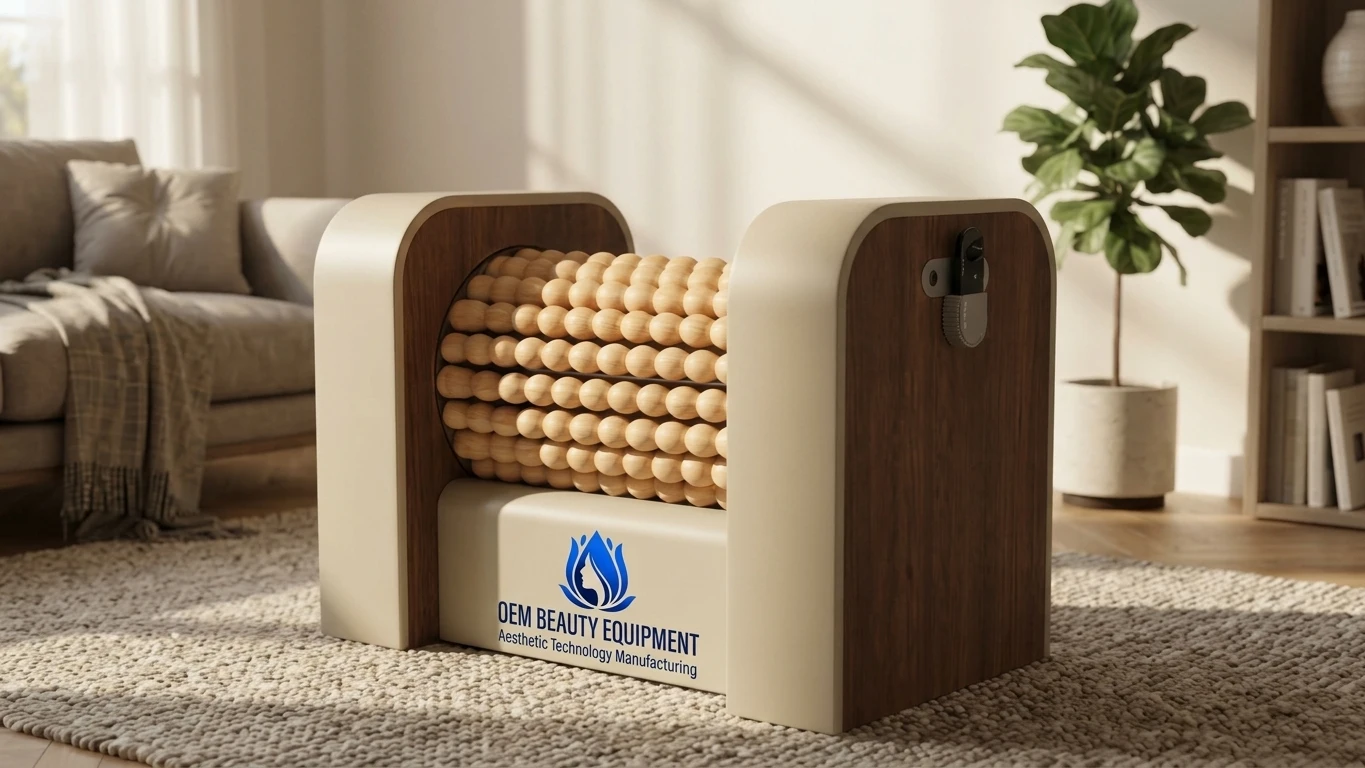
Roll therapy refers to a category of body treatments delivered through mechanical rolling devices, typically motorized rollers that move across the skin’s surface to apply pressure, motion, and in some cases suction. The term overlaps heavily with related categories like tissue rolling, body rolling, and roller therapy, and in practice, suppliers often use these terms interchangeably even when the underlying devices differ.
The core idea behind roll therapy is mechanical stimulation of the skin and underlying tissue. This is positioned to support several outcomes that matter to clinics building out a body treatment menu:
- A smoother, firmer appearance to the treated area
- Support for lymphatic-style fluid movement
- A relaxing, massage-like client experience
- A lower-cost, lower-complexity entry point compared to energy-based technologies
Tissue Rolling vs. Body Rolling vs. Roller Therapy: Are These the Same Thing?
For a B2B buyer, the terminology matters more than it might seem, because each term carries slightly different connotations in how it’s marketed and sold.
Tissue rolling typically refers to the mechanical action itself, the physical process of rollers moving across and lifting tissue. It’s the most technical and specific of the three terms.
Body rolling is a broader, more consumer-facing term, often used on treatment menus and marketing materials rather than technical spec sheets. It describes the client-facing treatment rather than the underlying mechanism.
Roller therapy sits somewhere in between, used both in clinical and consumer contexts, and often implies a specific therapeutic framing, i.e., positioning the treatment as functional (supporting circulation or lymphatic flow) rather than purely cosmetic.
In practice, a single device might be marketed under all three terms depending on which audience the supplier or clinic is addressing. When evaluating equipment, always ask the manufacturer for the technical specification rather than relying on which of these three terms appears in their catalog listing.
How Roll Therapy Equipment Works
The Mechanical Foundation
Most roll therapy devices share a common mechanical foundation: one or more motorized rollers that move across the treatment area in a controlled pattern. Variations between devices typically come down to:
- Number and configuration of rollers — single roller units versus multi-roller assemblies
- Added suction or vacuum elements — some devices lift tissue into the roller mechanism for deeper engagement
- Adjustable intensity and speed settings — allowing practitioners to calibrate the treatment per client and treatment area
- Treatment head size and shape — designed for specific body areas like the abdomen, thighs, or back
What the Research Actually Says
It’s worth being direct here, since this matters for how you position this category to your own clients and avoid overstating what the equipment does.
The clinical evidence specifically on cosmetic or aesthetic body rolling for things like cellulite appearance is limited. However, there is a more established, if still developing, body of research on mechanical rolling as a form of lymphatic drainage support in a clinical context, separate from aesthetic use. A literature review published in Cureus examined mechanical lymphatic drainage devices that use rolling-based mechanisms and found they can support lymph formation and drainage, particularly when combined with compression, though the review focused on clinical lymphedema management rather than aesthetic body contouring, and the authors noted that further study is still warranted.
The honest takeaway for a B2B buyer: roll therapy has a plausible mechanical rationale and some supporting research in adjacent clinical contexts, but you should avoid letting your marketing (or a supplier’s marketing) overstate aesthetic outcomes as clinically proven. Frame client-facing claims around “may support” and “designed to,” not guaranteed results, both for accuracy and to avoid regulatory exposure. Our guide on why CE, FDA, and ISO certifications matter covers this same principle from the compliance side: certification confirms safety and manufacturing standards, not specific treatment outcomes, and the two shouldn’t be conflated in your marketing.
Why Roll Therapy Is a Common Entry Point for Clinics and Brands
Lower Technical Complexity
Compared to energy-based technologies like RF or HIFU, roll therapy equipment is mechanically simpler. Fewer electronic components generally means a more straightforward manufacturing process, a shorter staff training curve, and a lower barrier to adding this category to an existing treatment menu.
Lower Price Point, Broader Accessibility
Roll therapy devices typically occupy a lower price tier than multifunctional or energy-based equipment, which makes them accessible both as a standalone clinic purchase and as an entry product for distributors building out a catalog.
Complementary to Other Treatments
Many clinics position roll therapy as a complementary or maintenance treatment alongside more intensive services like RF skin tightening or HIFU lifting, rather than as a standalone flagship offering. This makes it a reasonable addition even for clinics whose core revenue comes from other technologies.
Evaluating Roll Therapy Equipment: A B2B Buyer’s Checklist
Mechanism and Build Quality
Ask the manufacturer directly: how many rollers, what material, is there a suction element, and what’s the motor’s expected service life under regular clinical use? Request this in writing rather than relying on marketing descriptions, which, as covered above, use these terms loosely.
Certification Status
Confirm what certifications the specific model holds and that they match the configuration you’re ordering, not a related model in the same product family. If you’re unsure what to ask for, our guide on CE, FDA, and ISO certifications walks through the documentation to request.
Customization and Private Label Options
If you’re building a branded product line around this category, understand whether the manufacturer offers OEM or ODM arrangements for roll therapy devices specifically. Our OEM vs ODM guide explains the trade-offs between developing a custom design versus customizing an existing model, which applies directly to this category given how standardized the underlying mechanism tends to be across suppliers.
Supplier Verification
Because roll therapy devices sit at a lower price point, this category can attract a higher proportion of unverified resellers and inconsistent suppliers compared to higher-cost energy-based equipment. Treat supplier vetting as seriously here as you would for a larger purchase. Our guide on finding a reliable beauty equipment manufacturer covers exactly how to verify a factory, request a sample, and check certifications before committing to an order.
Realistic Positioning in Your Treatment Menu
Decide upfront whether this is a standalone revenue service, a complementary add-on, or a retention tool (bringing clients back between more intensive treatments). This decision affects both your pricing strategy and how much marketing investment the category deserves relative to your other equipment.
Building the Business Case: Where Roll Therapy Fits Your Treatment Menu
For Clinics Already Offering Energy-Based Treatments
If your clinic already offers RF, HIFU, or similar technologies, roll therapy can work as a complementary, lower-cost addition that extends client visit frequency without requiring a large new equipment investment. Our guide to choosing a professional facial machine covers a similar logic around matching equipment tiers to a layered treatment menu, which applies here: not every addition to your menu needs to be your highest-ticket item.
For New Clinics Building a Treatment Menu From Scratch
Roll therapy’s lower cost and simpler training requirements can make it a reasonable starting point for a new clinic still validating local demand before committing to larger equipment investments. This mirrors the broader lesson in our guide on common mistakes beauty equipment businesses make: confirm demand with a lower-risk investment before scaling into higher-cost categories.
For Distributors
Roll therapy devices, given their lower price point and broader applicability, can serve as an accessible entry product for first-time clinic buyers in your catalog, while your higher-cost energy-based equipment serves established clinics with larger budgets. The trade-off, as with any lower-cost category, is thinner margins per unit, which means sourcing reliable, well-vetted manufacturers matters even more to protect your reputation at volume.
For Private Label Brands
Because roll therapy’s mechanism is relatively standardized across manufacturers, this can be a lower-risk category to enter with a private label product, since the engineering risk is lower than with more complex multifunctional devices. That said, standardization also means differentiation is harder; your branding, packaging, and positioning will likely carry more of the competitive weight than the underlying technology itself.
Common Mistakes Buyers Make With This Category
Treating “Roll Therapy” as a Specific Technical Specification
As covered above, this term (along with tissue rolling and body rolling) is used inconsistently across suppliers. Never assume you know a device’s exact mechanism from the category name alone.
Overstating Clinical Claims to Clients
Given the limited aesthetic-specific research discussed earlier, avoid language that implies guaranteed or clinically proven cosmetic outcomes. Frame these treatments accurately, both to protect your business from liability and to maintain client trust when results vary.
Underestimating the Importance of Supplier Vetting at a Lower Price Point
It’s tempting to apply less scrutiny to a lower-cost equipment category, but a poorly built roll therapy device can still create safety issues, inconsistent performance, and reputational damage. Apply the same verification standards you would to a larger purchase.
Not Clarifying Positioning Before Purchase
Buying roll therapy equipment without deciding whether it’s a standalone service, a complementary add-on, or a retention tool leads to inconsistent marketing and unclear pricing. Decide this before the equipment arrives, not after.
Frequently Asked Questions
Is roll therapy the same as tissue rolling or body rolling?
These terms are often used interchangeably by suppliers, though “tissue rolling” tends to refer to the specific mechanical action, while “body rolling” is more commonly used in consumer-facing marketing. Always confirm the exact mechanism with the manufacturer rather than relying on terminology alone.
Is there clinical research supporting roll therapy’s effectiveness?
There’s more established research on mechanical rolling devices used for clinical lymphatic drainage support, particularly in lymphedema management, than on aesthetic cellulite-focused applications specifically. Buyers and clinics should frame client-facing claims conservatively and avoid implying guaranteed cosmetic outcomes.
How does roll therapy compare in cost to RF or HIFU equipment?
Roll therapy equipment is generally lower cost due to its simpler mechanical design, compared to energy-based technologies like RF or HIFU, which involve more complex electronics and typically carry higher certification and manufacturing costs.
Can roll therapy equipment be customized for a private label brand?
Yes, many manufacturers offer OEM or ODM options for roll therapy devices. Because the core mechanism is relatively standardized across the category, this can be a lower-risk entry point for brands building a private label line.
What should I check before buying roll therapy equipment for my clinic?
Confirm the exact mechanism (number of rollers, presence of suction, adjustable settings), request certification documentation for the specific model, verify the manufacturer is a legitimate, vetted supplier, and request a sample or live demonstration before committing to a bulk order.
Is roll therapy suitable as a standalone service, or only as an add-on?
It depends on your business model and client base. Some clinics successfully position it as a standalone maintenance service, while others use it as a complementary add-on to higher-cost treatments. Decide this positioning before purchase, since it affects pricing and marketing strategy.
Conclusion: Evaluate the Mechanism, Not the Marketing Term
Roll therapy, tissue rolling, and body rolling are often used as interchangeable marketing labels for a category of mechanical rolling devices with genuine, if modest, clinical rationale, particularly around lymphatic-style fluid support. For B2B buyers, the smart approach is the same one that applies across every equipment category covered in this series: look past the category label, request the actual technical specification, verify certifications for the exact model, and vet your supplier properly, regardless of how low the entry price point might be.
Roll therapy can be a genuinely useful, lower-risk addition to a treatment menu or product catalog, provided you buy it with the same diligence you’d apply to a higher-cost purchase, and market it with language that matches what the current evidence actually supports.