
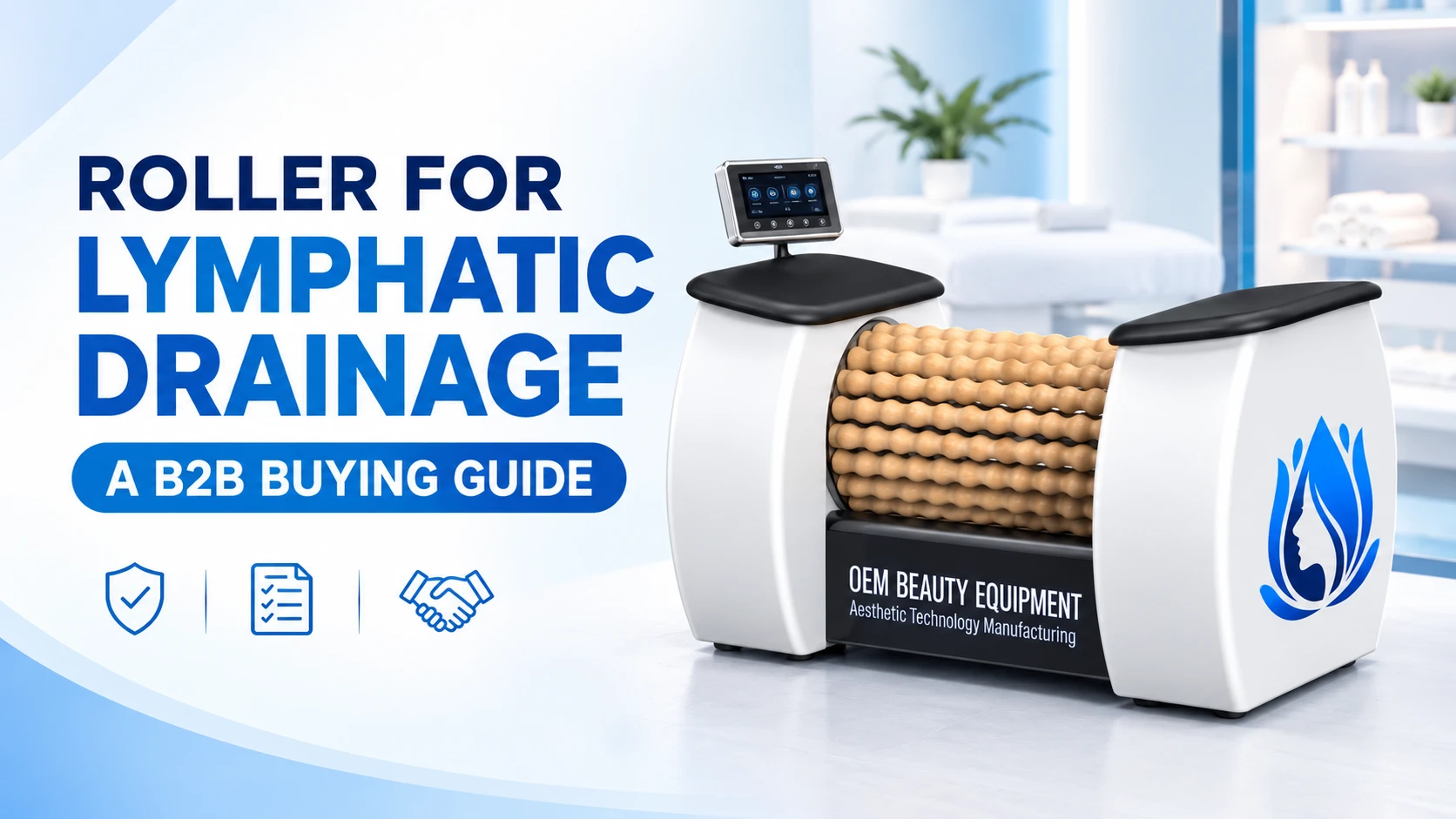
Roller for Lymphatic Drainage: A B2B Buying Guide
Searching for “a roller for lymphatic drainage” turns up an enormous range of products, from basic single-roller handheld tools to multi-zone motorized machines costing many times more. For a clinic, distributor, or private label brand trying to source the right equipment, the breadth of this category is exactly the problem: there’s no single standard build, and the right choice depends heavily on your treatment areas, client base, and business model.
This guide walks through the main types of lymphatic drainage rollers on the market, how treatment-area design affects which device you need, what to verify before buying, and how to think about this purchase as a business decision rather than just a technology comparison.
Understanding the Category: What “Roller for Lymphatic Drainage” Actually Covers
Before comparing specific products, it’s worth being clear that this search term and category label covers a genuinely wide range of underlying devices, including:
- Handheld manual rollers, with no motor, relying entirely on practitioner technique
- Motorized single-zone rollers, designed for one treatment area at a time (e.g., legs, arms, face)
- Multi-zone or full-body machines, with multiple roller heads or attachments for different body areas
- Combination devices, pairing rolling with vacuum, compression, or light-based elements, covered in more detail in our earlier guide on infrared lymphatic massage rollers
This breadth is why “roller for lymphatic drainage” functions more as a search intent category than a specific product type. A buyer typing this phrase could reasonably be looking for anything from a $30 handheld tool to a several-thousand-dollar clinical machine. As a B2B sourcing decision, your job is to figure out which tier actually fits your business before you start comparing suppliers.
The Core Physiological Rationale
As covered in our complete guide to lymphatic drainage roller machines, the lymphatic system relies on muscle contraction and external pressure, rather than a central pump, to move fluid through the body. Mechanical rollers are positioned to support this external pressure component, generally applied in specific directional patterns.
A literature review published in Cureus found supporting evidence for mechanical lymphatic drainage techniques in clinical lymphedema management contexts, while noting that further research is still warranted to fully establish protocols. As with our earlier guides in this series, it’s worth being precise here: this research supports the general mechanical rationale behind rolling-based lymphatic drainage, but it was conducted in clinical contexts under professional protocols, not as validation of any specific commercial aesthetic device. Keep marketing claims grounded in the general mechanical principle rather than implying a specific product has been independently clinically proven.
Device Types Compared
Compare the primary equipment categories below to evaluate typical cost points, operational suitability, and critical operational considerations for your facility:
| Device Type | Typical Cost Tier | Best Suited For | Key Consideration |
|---|---|---|---|
| Handheld manual roller | Lowest | Add-on tool, practitioner-led technique | Entirely dependent on technique; minimal consistency across staff |
| Motorized single-zone roller | Low-mid | Clinics focused on one treatment area (e.g., legs or face) | Lower cost, but requires separate devices if expanding treatment areas |
| Multi-zone/full-body machine | Mid-high | Clinics offering comprehensive body treatments | Higher upfront cost, broader service capability |
| Combination device (rolling + vacuum/infrared) | Highest | Clinics wanting a differentiated, premium offering | Requires careful, separated claims (see our infrared roller guide) |
Choosing the Right Roller by Treatment Area
Rollers for Legs
Leg treatments are one of the most common applications for lymphatic drainage rollers, often addressing the appearance of puffiness or fluid retention in the lower legs and ankles. Devices designed specifically for this area typically feature:
- Longer roller beds or multiple roller sections to accommodate the full length of the lower leg
- Adjustable width or contouring to fit different leg shapes comfortably
- Directional design intended to move in a pattern toward the knee and upper leg, following general lymphatic pathway logic
A device built for facial or arm treatment generally won’t translate well to leg treatment without modification, so if legs are a core part of your treatment menu, prioritize suppliers who can confirm the device is specifically designed and sized for this area, not just a general-purpose roller being marketed broadly.
Rollers for Arms
Arm-focused devices tend to be more compact than leg-designed equipment, with roller configurations suited to the narrower treatment area. Some multi-zone machines include interchangeable attachments to cover both arms and legs from one base unit, which can be a more cost-efficient option for clinics wanting broader coverage without purchasing entirely separate machines.
Rollers for the Face and Neck
Facial lymphatic drainage has grown as a standalone service category, often marketed around reducing the appearance of puffiness and supporting a more defined facial contour. These devices are necessarily smaller and gentler than body-focused equipment, with finer roller configurations and lower default pressure settings appropriate for more sensitive facial skin.
Multi-Zone and Full-Body Devices
For clinics wanting to offer comprehensive lymphatic drainage across multiple body areas, a multi-zone machine with interchangeable heads or attachments can be more practical and cost-efficient than purchasing separate single-area devices, provided the build quality holds up across all the included attachments. Ask suppliers directly whether each attachment is purpose-built for its treatment area or whether the machine uses a single generic roller head across all claimed uses, since the latter is a common way manufacturers inflate a product’s apparent versatility without genuine engineering behind each use case.
What to Verify Before Buying
Treatment Area Specificity
Confirm the device is actually designed and tested for the specific treatment areas you plan to offer. A roller marketed broadly as suitable for “full body” use deserves closer scrutiny than one with clearly documented, area-specific design.
Certification Coverage
As covered in our certifications guide, confirm certifications apply to the exact model and configuration, including any treatment-area-specific attachments. For a category making lymphatic claims specifically, this deserves the extra scrutiny outlined in our lymphatic drainage roller machine guide: understand exactly what claims the certification supports, not just that a certificate exists.
Build Quality Across Attachments
For multi-zone devices in particular, ask about the material, motor rating, and expected service life of each individual attachment, not just the base unit. A base unit with a weak attachment for one treatment area undermines the value of the whole device for clinics planning to offer that specific service.
OEM/ODM Options for Treatment-Area Customization
If you’re building a private label line, our OEM vs ODM guide explains the broader trade-offs. For this category specifically, ask whether the manufacturer can customize attachment configurations to match the specific treatment areas your brand plans to emphasize, rather than taking a fully generic multi-zone device as-is.
Manufacturer Verification
Given the claims sensitivity around lymphatic positioning discussed in our earlier guide, supplier credibility matters significantly here. Our guide on finding a reliable beauty equipment manufacturer covers exactly how to vet a factory and avoid suppliers who overstate capabilities or claims to close a sale.
Matching the Device to Your Business Model
Single-Treatment-Area Clinics
If your clinic’s demand is concentrated on one treatment area, legs, for instance, a dedicated single-zone device purpose-built for that area will generally outperform a generic multi-zone machine on both treatment quality and cost efficiency. Don’t pay for broader capability you won’t use.
Full-Service Body Contouring Clinics
If lymphatic drainage is one part of a broader body contouring menu covering multiple areas, a well-built multi-zone machine can be more practical, provided you’ve verified build quality across every attachment you intend to use regularly.
Distributors Serving a Range of Clinic Sizes
Carrying both single-zone and multi-zone options lets you serve clinics at different stages, smaller or newer clinics focused on one service, and established clinics wanting comprehensive coverage. Make sure your sales team understands the genuine trade-offs between these tiers well enough to recommend accurately rather than upselling the most expensive option by default.
Private Label Brands
For brands sourcing this category, consider starting with a focused, single-treatment-area product rather than an ambitious full-body device for a first launch. This lowers your upfront investment and lets you validate demand and refine your marketing claims before expanding into a broader, more complex product line.
Common Mistakes to Avoid
Buying Broad Capability Before Confirming Demand
A multi-zone device sounds appealing, but if your actual client demand is concentrated on one or two treatment areas, you may be overpaying for capability that sits unused.
Assuming One Roller Design Works for Every Body Area
As covered above, legs, arms, and face each warrant different roller sizing, pressure calibration, and directional design. A generic “full body” roller without area-specific engineering is a red flag worth investigating further.
Overlooking Attachment-Specific Quality on Multi-Zone Machines
Don’t evaluate a multi-zone device only on its base unit. Ask specifically about the build quality and certification of each attachment relevant to your planned treatment menu.
Overstating Lymphatic Claims Regardless of Device Tier
As detailed in our lymphatic drainage roller machine guide, keep marketing language grounded in the general mechanical rationale rather than implying any specific device has been clinically proven to treat medical conditions.
Frequently Asked Questions
What’s the best roller for lymphatic drainage in the legs specifically?
Look for a device specifically designed and tested for leg treatment, with a roller bed long enough to cover the lower leg and a directional design intended to move toward the knee. A generic full-body roller without leg-specific engineering may not perform as well for this treatment area.
Is a multi-zone machine better than separate single-area devices?
It depends on your treatment menu and budget. A well-built multi-zone machine can be more cost-efficient if you genuinely need multiple treatment areas, but a dedicated single-zone device often performs better and costs less if your demand is concentrated on just one area.
How do I know if a roller is actually designed for a specific body area, or just marketed broadly?
Ask the manufacturer for the specific design details, roller dimensions, pressure range, and directional pattern, for the exact treatment area you’re interested in. A supplier who can’t provide this level of detail may be marketing a generic device as more versatile than its actual engineering supports.
What certifications matter most for this category?
Confirm certifications apply to the exact model and, for multi-zone devices, to each relevant attachment. Given the lymphatic claims involved, understand specifically what the certification supports rather than assuming broad coverage from a general certificate.
Can I get a lymphatic drainage roller customized for a specific treatment area under my own brand?
Yes, many manufacturers offer OEM or ODM customization, including treatment-area-specific attachment configurations. Confirm MOQ and customization options directly, and consider starting with a focused, single-area product for an initial private label launch.
Should I buy a basic mechanical roller or a combination device with infrared or vacuum elements?
This depends on your budget, target client base, and marketing capacity. A basic mechanical roller is lower cost and lower claims risk. A combination device can support a premium price point but requires more careful, separated marketing claims, covered in detail in our infrared lymphatic massage roller guide.
Conclusion: Match the Roller to the Treatment Area, Not the Other Way Around
Choosing the right roller for lymphatic drainage starts with your actual treatment menu and client demand, not with whichever device looks most advanced in a supplier catalog. Confirm the device is genuinely designed for your target treatment areas, verify certification coverage carefully given the claims involved, and vet your manufacturer thoroughly before committing. A well-matched, honestly marketed single-zone device will consistently outperform an oversized, overclaimed multi-zone machine that doesn’t fit your actual business.