
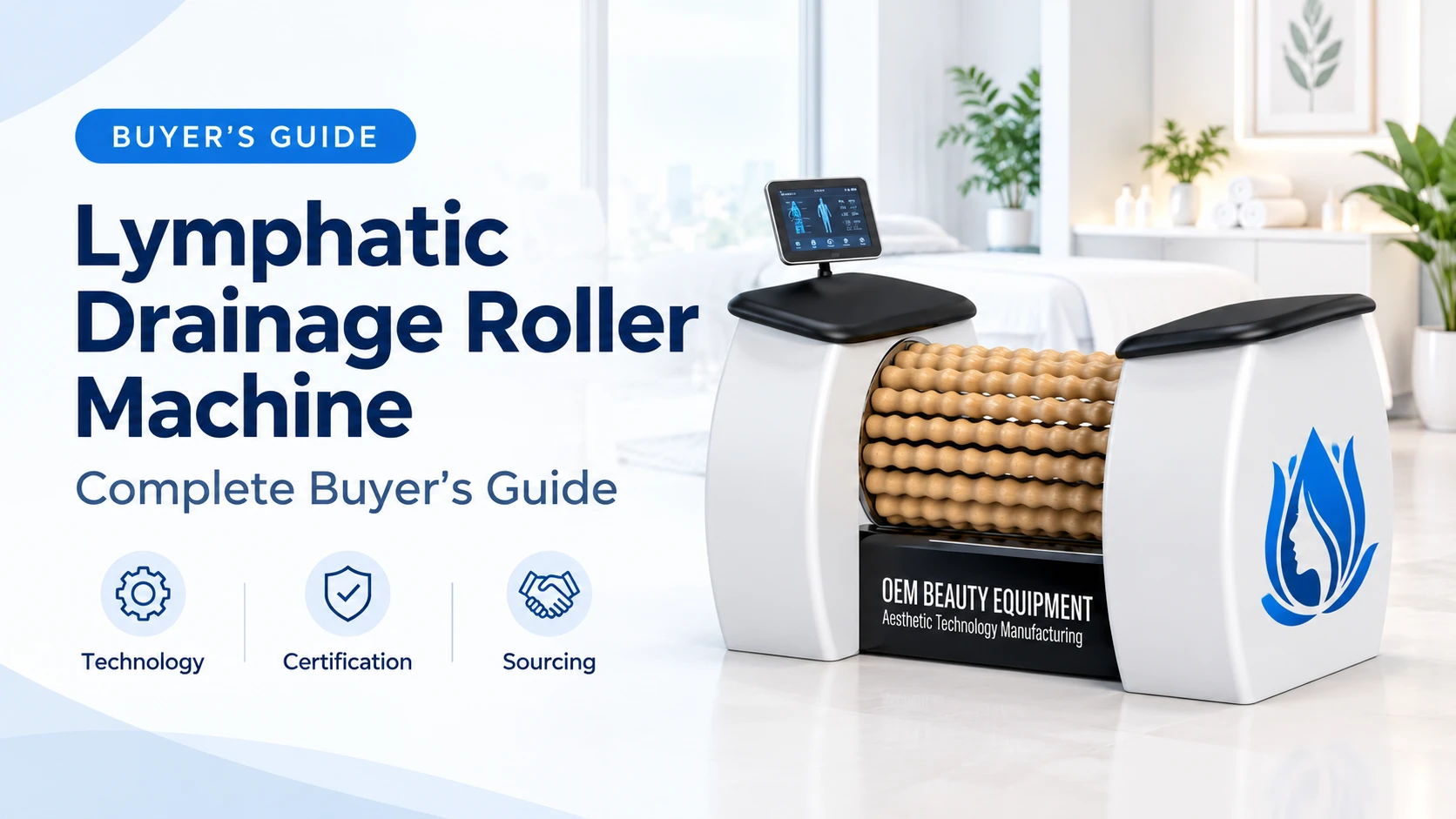
Lymphatic Drainage Roller Machine: Complete Buyer’s Guide
Of all the roller-based equipment categories covered in this series, the lymphatic drainage roller machine is arguably the most consequential to get right, both in sourcing and in marketing. Unlike a general shaping or massage device, this category makes a specific functional claim: that it supports the body’s lymphatic system. That claim comes with real clinical context behind it, real regulatory implications, and real expectations from clients who may be seeking this treatment for reasons beyond pure aesthetics.
This guide is written for the buyer deciding whether and how to add this category to a clinic, distribution catalog, or private label line. It covers what the equipment actually does, what the research supports, how to vet suppliers and certifications, and how to avoid the claims mistakes that carry the most risk in this particular category.
What Is a Lymphatic Drainage Roller Machine?
A lymphatic drainage roller machine is a device that uses motorized rollers, often combined with adjustable compression or suction, to apply mechanical pressure and motion across the body in patterns intended to support lymphatic fluid movement. The lymphatic system relies on muscle contraction and external pressure, rather than a central pump like the heart, to move fluid through the body, which is the basic physiological rationale behind mechanical devices positioned in this category.
These machines are used both in dedicated lymphatic drainage treatments and as part of broader body contouring menus, where lymphatic support is positioned alongside cosmetic goals like reduced appearance of puffiness or improved skin texture.
How Lymphatic Drainage Roller Machines Work
The Mechanical Principle
The lymphatic system doesn’t have a central pump. Fluid movement relies on a combination of muscle contraction, breathing, and external pressure applied in specific directional patterns, generally toward lymph nodes. Mechanical rolling devices attempt to replicate and support this external pressure component through:
- Directional rolling motion, often designed to move in patterns that follow general lymphatic pathways
- Adjustable compression, allowing practitioners to calibrate pressure intensity
- Sequential or multi-zone rollers, in more advanced machines, designed to apply pressure in a coordinated sequence across a treatment area
What the Clinical Research Actually Shows
This is the section that matters most for how you position and market this category, so it’s worth being precise rather than promotional.
Mechanical lymphatic drainage devices have a genuine, if still developing, evidence base, primarily in clinical contexts related to lymphedema management rather than purely cosmetic applications. A literature review published in Cureus examined a specific mechanical lymphatic drainage approach and found supporting evidence for its role in lymph formation and drainage when used in a clinical lymphedema context, while also noting that further research is still needed to fully establish treatment protocols and long-term outcomes.
Separately, a study published in the journal Lymphology evaluated a modified manual lymphatic drainage technique incorporating a rolling element combined with pressure, applied to patients with lymphedema, reporting measurable improvement in treated limbs over a six-week treatment period.
Two things are true at the same time here, and both matter for how you market this equipment:
- The mechanical rationale for lymphatic drainage rollers has real, if still limited, clinical research support, which distinguishes this category from some others covered in this series where the evidence is thinner or entirely absent.
- This research was conducted in clinical lymphedema management contexts, generally under professional supervision with specific protocols, not in a cosmetic spa or clinic setting with a commercial roller machine. Extending these findings directly to cosmetic marketing claims, promising “detox,” guaranteed reduction in swelling, or medical-grade therapeutic outcomes from a commercial aesthetic device, goes beyond what this research actually supports.
The responsible middle ground: you can accurately say that mechanical rolling, as a general technique, has research support for lymphatic fluid movement in clinical contexts, and that your equipment uses a similar mechanical principle. You should not claim your specific commercial device has been clinically proven to treat lymphedema or guarantee therapeutic health outcomes, unless it has actually been tested and cleared for that specific medical claim, which is a meaningfully higher regulatory bar than general wellness equipment.
Lymphatic Roller Machine vs. Lymphatic Body Roller Machine: Is There a Difference?
As with other categories in this series, these terms are often used interchangeably across suppliers, but worth clarifying:
- Lymphatic roller machine tends to be used as the general category term, covering devices of varying size and treatment focus.
- Lymphatic body roller machine often specifically signals a larger-format device designed for full-body or multi-zone treatment, as opposed to smaller units focused on a single area like the face or limbs.
As always, treat these as starting points for a conversation with your supplier rather than confirmed specifications. Request the actual treatment area coverage, roller configuration, and compression range for any specific model you’re evaluating.
Who Buys This Equipment, and Why
Medical Spas and Wellness-Positioned Clinics
This category has particular appeal for clinics positioned around wellness and recovery, rather than purely cosmetic outcomes, since the lymphatic framing resonates with clients interested in post-travel puffiness, general wellness maintenance, or recovery support alongside aesthetic goals.
Clinics Offering Post-Procedure Support
Some clinics position lymphatic drainage services as a complement to other aesthetic procedures, where supporting fluid movement may be relevant to a client’s broader recovery or comfort, though specific claims about accelerating recovery from any particular procedure should be made cautiously and only with appropriate clinical backing.
Distributors Building a Wellness-Adjacent Catalog
For distributors, this category can bridge aesthetic and wellness markets, appealing to both traditional beauty clinics and wellness centers, spas, and recovery-focused businesses that might not otherwise be in your typical customer base.
Private Label Brands Targeting the Wellness Space
Given the genuine (if limited) research backing and the broader wellness positioning opportunity, this can be an attractive category for brands wanting to extend beyond purely cosmetic positioning into recovery and wellness-adjacent marketing, provided claims stay grounded in what the evidence actually supports.
What to Evaluate Before Buying or Stocking This Equipment
Request the Specific Mechanical Specification
Ask directly: how many rollers, what compression range, is there a directional or sequential pattern designed to follow lymphatic pathways, and what treatment areas is the device designed and sized for? Don’t rely on the category name alone.
Verify Certification Carefully
Because this category’s claims touch on lymphatic function, a topic with genuine medical and clinical dimensions, certification and regulatory scrutiny deserve extra attention compared to purely cosmetic shaping devices. Confirm:
- What certifications the specific model holds, and whether they cover general wellness/cosmetic use or anything closer to a medical device classification
- Whether the certification documentation matches the exact claims you intend to make in your own marketing
- Whether your target market draws a regulatory distinction between general wellness devices and devices making more specific lymphatic health claims
Our guide on why CE, FDA, and ISO certifications matter covers how to request and verify this documentation; for this category specifically, be prepared to ask more pointed follow-up questions about exactly what claims the certification supports.
Confirm OEM/ODM Options
If you’re building a private label product in this category, our OEM vs ODM guide explains the core trade-offs. For lymphatic drainage equipment specifically, pay particular attention to whether a manufacturer offering ODM customization can also provide the underlying research or technical documentation that supports whatever claims you plan to use in your own branding, since you’re inheriting responsibility for those claims once the product carries your name.
Vet the Manufacturer Thoroughly
Given the claims sensitivity in this category, supplier credibility matters more than almost anywhere else in this series. A manufacturer willing to overstate clinical claims to close a sale is handing you liability exposure along with the product. Our guide on finding a reliable beauty equipment manufacturer walks through exactly how to verify a factory’s legitimacy, request proper documentation, and spot suppliers who overpromise.
Building the Business Case
Cost Structure
Lymphatic drainage roller machines span a wide price range depending on roller configuration, compression technology, and whether the device includes additional elements like sequential zone control or digital treatment programs. Build your cost model the same way covered in earlier guides in this series: total landed cost, realistic treatment pricing, expected session volume, training needs, and any consumables.
Positioning and Pricing Strategy
Because this category can appeal to wellness-oriented clients willing to pay for perceived therapeutic value, not just cosmetic clients, there’s often room for a premium price point compared to purely cosmetic roller equipment, provided your marketing claims are both compelling and accurate. Overclaiming to justify a premium price is the single biggest risk in this category; undersized, honest claims paired with a genuinely good client experience tend to build more sustainable repeat business than inflated promises that eventually disappoint.
Staff Training Requirements
Given the physiological claims involved, staff delivering lymphatic drainage treatments should understand, at least at a foundational level, how the lymphatic system works, which treatment directions and patterns are appropriate, and what contraindications exist (certain medical conditions, recent surgeries, or active infections, for example, may warrant caution or exclusion). This is a category where undertrained staff create more risk than with a purely cosmetic shaping device, so factor proper training time and resources into your rollout plan, not just the equipment purchase price.
Common Mistakes to Avoid
Overclaiming Clinical or Medical Benefits
This is the single highest-risk mistake in this entire category. Avoid language implying your device treats lymphedema, guarantees detoxification, or delivers medical-grade therapeutic outcomes unless you have specific regulatory clearance and clinical evidence for your exact product supporting those claims.
Assuming All “Lymphatic” Labeled Devices Are Equivalent
As with other categories in this series, the lymphatic positioning is sometimes applied loosely across products with meaningfully different build quality and design. Request the actual specification before assuming equivalence across suppliers using similar marketing language.
Underestimating Staff Training Needs
Given the physiological claims and potential contraindications involved, this category deserves more thorough staff training than a purely cosmetic device, not less.
Skipping Deeper Certification Questions
Don’t accept a general certification at face value for a category making lymphatic health claims. Ask specifically what the certification covers and whether it supports the claims you intend to make.
Frequently Asked Questions
Is there scientific evidence supporting lymphatic drainage roller machines?
There is genuine, if still developing, research supporting mechanical rolling as a technique for lymphatic fluid support, primarily studied in clinical lymphedema management contexts. This research supports the general mechanical rationale but shouldn’t be used to imply that a specific commercial cosmetic device has been clinically proven to treat medical conditions.
What’s the difference between a lymphatic roller machine and a lymphatic body roller machine?
These terms are often used interchangeably, though “lymphatic body roller machine” more often signals a larger-format device designed for full-body or multi-zone treatment, as opposed to smaller, single-area units. Always confirm the specific treatment area coverage with the manufacturer.
Can I claim my lymphatic drainage roller machine treats medical conditions like lymphedema?
This requires significantly more caution and regulatory clearance than general wellness marketing. Unless your specific product has appropriate clinical evidence and regulatory clearance for medical claims, keep marketing language focused on general wellness support rather than implying treatment of a medical condition.
What certifications should I look for in this category?
Confirm the specific model’s certification covers the claims you intend to make, and understand whether your target market distinguishes between general wellness devices and those making more specific health-related claims. This category warrants closer certification scrutiny than purely cosmetic shaping equipment.
Is this a good category for a private label wellness brand?
It can be, given the genuine research backing and broader wellness market appeal, provided your sourcing, certification, and marketing claims are all handled with the appropriate level of care given the physiological claims involved.
What training do staff need to use this equipment safely?
Staff should understand basic lymphatic system function, appropriate treatment patterns and directions, and relevant contraindications. This category generally warrants more thorough training than purely cosmetic shaping equipment, given the physiological claims and potential client health considerations involved.
Conclusion: The Category With the Most Upside and the Most Responsibility
A lymphatic drainage roller machine sits in an unusual position within this broader equipment category: it has more genuine research support than many adjacent product types, but it also carries more claims risk if that research is misrepresented or overextended. For B2B buyers, this combination demands the same fundamentals covered throughout this series, verified specifications, proper certification, careful supplier vetting, with an added layer of discipline around claims accuracy given the physiological territory this equipment touches.
Done right, with honest marketing grounded in what the evidence actually supports and staff trained to deliver the treatment safely, this can be one of the more defensible, higher-value additions to a wellness-oriented treatment menu or product catalog. Done carelessly, with overstated claims borrowed from clinical research that doesn’t actually apply to the commercial product being sold, it’s also one of the categories most likely to create real liability exposure.