
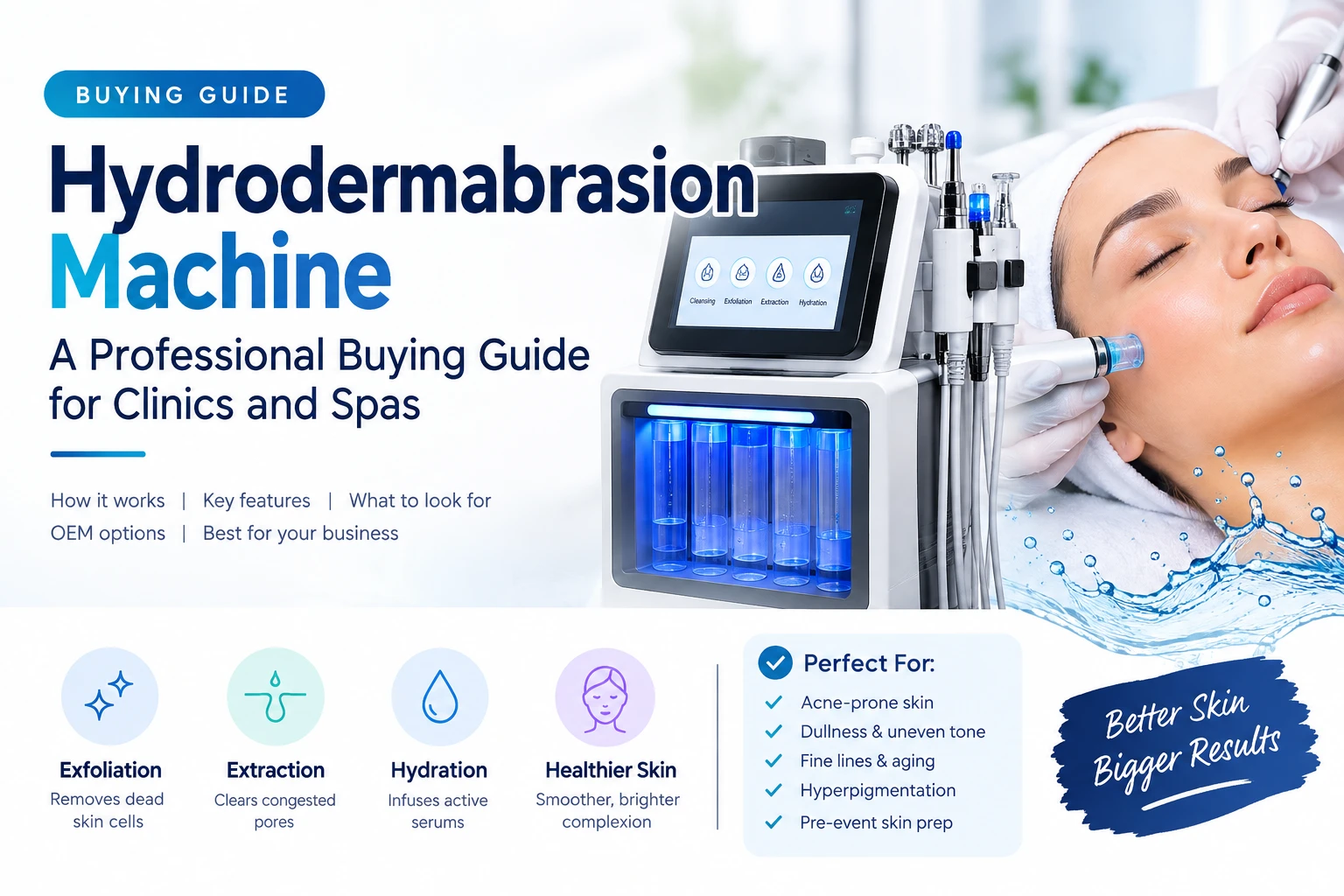
Hydrodermabrasion Machine: A Professional Buying Guide for Clinics and Spas
A spa director in Lisbon once told me she almost passed on hydrodermabrasion entirely because her first machine felt more like an expensive facial cleanser than a genuine clinical treatment. The suction was weak, the serum delivery was inconsistent between handpieces, and clients left saying it felt nice without really noticing a difference. A year later, after switching to a properly engineered multi-function platform, the exact same treatment category became one of her most rebooked services. Same treatment name, completely different machine, completely different business outcome.
Hydrodermabrasion has become one of the fastest-growing facial treatment categories in professional skincare, largely because it delivers visible, immediate results with zero downtime, which is exactly what most facial clients are looking for. But like several other categories in this equipment space, the term covers a genuinely wide range of machine quality, from basic single-function units to sophisticated multi-modality platforms combining exfoliation, oxygen infusion, RF, and LED in a single device.
This guide covers how hydrodermabrasion technology actually works, what separates a genuinely capable professional machine from a lower-tier import, and where OEM options fit in for clinics and beauty brands building their own equipment line.
What Is a Hydrodermabrasion Machine?
A hydrodermabrasion machine is a professional skincare device that combines water-based exfoliation, gentle suction, and serum infusion into a single treatment step, removing dead skin cells and impurities while simultaneously delivering hydrating or active ingredients into the skin.
It’s worth being precise about terminology here, since this is a category where branding and generic technology get conflated constantly. HydraFacial refers specifically to one company’s proprietary system and branded serum line. Hydrodermabrasion is the generic technology category, describing any device using water-assisted exfoliation combined with suction and serum infusion, regardless of manufacturer. The underlying mechanism across the category is essentially the same: a pressurized aqueous solution loosens and lifts dead skin cells and debris while delivering active ingredients into the pore, whether that’s marketed under a specific brand name or sold as a general professional hydrodermabrasion platform.
How Hydrodermabrasion Technology Works
The treatment typically moves through several stages within a single handpiece pass, combining cleansing, exfoliation, extraction, and hydration rather than requiring separate steps and products the way a traditional facial does. A vacuum-assisted tip draws the skin’s surface into gentle contact while a circulating water and serum solution simultaneously exfoliates and infuses, and the same suction mechanism lifts away loosened debris and extracted material from the pores as the treatment progresses.
Because the entire process happens in one continuous motion rather than multiple separate manual steps, results tend to appear immediately, smoother texture, reduced congestion, and a visibly brighter complexion right after a single session, which is a significant part of why the category has built such strong repeat-client loyalty in professional spas and clinics.
What Skin Concerns Can Hydrodermabrasion Treat?
Clinics typically use hydrodermabrasion for:
- General exfoliation and skin texture improvement
- Congested pores and mild acne-prone skin
- Dullness and uneven tone
- Fine lines and early signs of aging
- Hyperpigmentation, particularly when paired with targeted serums
- Pre-event or pre-photo skin prep, given the immediate visible result
Versatility across these concerns depends heavily on the specific handpieces and serum infusion capabilities a given machine offers, which is one of the biggest differentiators between entry-level and professional-grade platforms.
Why Clinics and Spas Are Investing in Hydrodermabrasion
Few facial treatment categories combine client satisfaction and business economics quite as effectively as hydrodermabrasion does.
Clients notice a difference immediately after a single session, which builds trust and word-of-mouth referral in a way that treatments requiring weeks to show results simply can’t match. There’s essentially no downtime or recovery period, so it appeals to a much broader client base than more intensive resurfacing treatments, including clients who want a polished appearance ahead of an event without any visible redness or peeling afterward. Sessions are comfortable, generally described as relaxing rather than uncomfortable, which lowers the barrier for first-time clients considering a professional skincare treatment for the first time.
For the business side, hydrodermabrasion tends to command a premium price point relative to a standard facial while requiring less consumable cost per session than some other treatment categories, supporting strong margins. It also pairs naturally with other services already covered in this equipment category. A clinic offering RF machines or LED-based treatments can often position hydrodermabrasion as an entry point into a broader facial treatment menu, since it’s typically less intimidating for a new client than a more clinical-sounding energy-based procedure.
There’s also a scheduling advantage worth noting. Sessions typically run between thirty and forty five minutes, short enough to fit comfortably into a lunch break appointment slot, which helps clinics maintain steady booking volume throughout a standard business day without the longer commitment some other facial treatments require. That combination of a manageable time slot, immediate visible result, and strong repeat-booking pattern is part of why so many clinics treat hydrodermabrasion as a foundational service rather than an occasional add-on.
Key Features to Look for in a Professional Hydrodermabrasion Machine
Spec sheets in this category vary enormously, and understanding what to actually compare matters more here than in almost any other device category, since the differences are easy to overlook on a surface-level product listing.
Vacuum Suction Strength and Control
Adjustable, consistent suction is central to how effectively the machine lifts debris from pores. A machine with weak or inconsistent suction underperforms regardless of how sophisticated its other features look on paper, and adjustability matters since different skin types and treatment areas call for different suction intensity.
Serum Delivery System
Look for a machine offering multiple serum bottle channels, allowing different active ingredients to be delivered at different stages of the treatment rather than relying on a single mixed solution throughout. This gives providers far more flexibility to customize treatment for different skin concerns within a single session.
Handpiece Variety and Tip Options
Professional platforms typically offer multiple exfoliation tips suited to different skin sensitivities and treatment goals, along with specialized handpieces for functions like oxygen infusion, bio-lifting, or cooling. More handpiece variety generally means broader treatment versatility from a single device.
Combined Modality Options
Many professional platforms now integrate hydrodermabrasion alongside complementary technologies such as RF for immediate tightening, LED for post-treatment calming, or ultrasound for enhanced serum absorption. These combination platforms let a single device deliver a more comprehensive treatment menu without requiring separate standalone machines for each modality.
Skin Diagnostic Capability
Some advanced systems include built-in skin analysis features, using imaging technology to assess specific skin conditions before treatment begins. While not essential, this feature can meaningfully enhance the client consultation experience and support more tailored treatment planning.
Build Quality and Consumable Costs
Confirm what serums and consumables the machine requires, and whether the manufacturer locks buyers into proprietary, marked-up serum lines or allows sourcing compatible serums from other suppliers. This single detail can significantly affect long-term operating cost, sometimes more than the upfront machine price itself.
Hydrodermabrasion Machine Specifications That Matter
| Specification | Why It Matters |
|---|---|
| Vacuum Pressure Range | Affects exfoliation and extraction effectiveness |
| Serum Bottle Channels | More channels allow greater treatment customization |
| Handpiece Count | Determines treatment versatility per session |
| Combined Modalities | RF, LED, or ultrasound integration expands the treatment menu |
| Power Output | Affects consistency of suction and treatment stability |
| Display/Interface | Affects training time and staff ease of use |
| Serum Compatibility | Determines long-term consumable cost flexibility |
Ask suppliers directly whether serums are proprietary or open-compatible, since this detail rarely appears clearly on a spec sheet but has a real, ongoing impact on your operating margin.
Certifications a Professional Hydrodermabrasion Machine Should Have
Hydrodermabrasion generally carries a lower regulatory risk profile than energy-based devices like laser or RF systems, but certification still matters for both safety and buyer confidence.
Look for CE certification confirming the device meets recognized safety and performance standards for the European market, and confirm the manufacturer maintains ISO 13485 certification, the internationally recognized quality management standard for medical and aesthetic devices. For clinics in the United States, confirming the manufacturer’s proper FDA registration and listing status provides an additional layer of assurance, even for lower-risk device categories. You can review the certifications maintained across our own device range on our certification page.
How to Choose a Hydrodermabrasion Machine Manufacturer
As with every category covered in this equipment space, the manufacturer behind the device shapes the ownership experience just as much as the specifications themselves.
Manufacturing experience specifically in multi-function facial platforms matters, since these devices combine several distinct technologies, suction, serum delivery, and often RF or LED, into a single reliable system, which is a different engineering challenge than a single-modality device. Ask how long the manufacturer has produced hydrodermabrasion or combined facial platforms specifically.
Confirm serum sourcing policy directly and in writing before purchasing, since this is one of the most common areas where buyers discover unexpected long-term costs after the sale rather than before it. Technical support and spare parts availability matter here just as much as in any other category, particularly for handpieces and consumable components that see daily use. Warranty terms should be confirmed clearly, and training should cover not just device operation but also serum selection and treatment customization for different skin concerns.
It’s also worth asking how the manufacturer supports formulation flexibility if you plan to develop your own branded serum line down the road. A manufacturer experienced in this category can often advise on compatible active ingredient concentrations and delivery formats, which matters if a clinic or brand eventually wants to move beyond generic third-party serums toward a signature product line of its own.
OEM Hydrodermabrasion Machines for Clinics and Beauty Brands
For distributors, spa groups, and beauty brands looking to build a device line rather than resell a generic unit, an OEM beauty equipment manufacturer can build hydrodermabrasion platforms customized around your brand on top of an already proven multi-function system.
Customization typically covers housing design and color, branding and logo placement across the unit and handpieces, touchscreen interface and language localization, and the specific combination of modalities included in the platform, whether that’s a focused hydrodermabrasion-only system or a broader multi-function device incorporating RF, LED, or ultrasound. Building on an existing, tested platform significantly reduces development time and engineering risk compared to designing a multi-modality facial system from scratch, while still giving your brand full ownership of the customer-facing product and, in some cases, your own branded serum line. If you’re weighing whether to customize an existing platform or commission a fully bespoke design, our comparison of OEM vs ODM beauty equipment manufacturing breaks down which path fits your budget and timeline.
Common Mistakes When Buying a Hydrodermabrasion Machine
Most disappointing purchases in this category trace back to a fairly predictable set of oversights.
Underestimating the importance of suction consistency, and being swayed instead by a long list of included handpieces without checking whether the core suction and serum delivery mechanism actually performs well, leads to a machine that looks impressive on a spec sheet but underdelivers in the treatment room. Ignoring serum compatibility policy locks clinics into ongoing proprietary consumable costs that weren’t factored into the original purchase decision. Skipping certification verification, even for a lower-risk device category, still exposes clinics to unnecessary regulatory and liability risk. Choosing a single-function device without considering whether a combined modality platform would better support a broader treatment menu can mean an earlier-than-expected upgrade once client demand grows. And overlooking training quality, assuming the treatment is simple enough not to need it, results in inconsistent client outcomes across different staff members delivering what should be a highly standardized treatment.
A less obvious mistake worth mentioning is failing to test the actual client experience before committing to a purchase. Two machines with nearly identical spec sheets can feel noticeably different in practice, in suction sensation, handpiece ergonomics, and treatment flow, differences that only become apparent through an in-person demonstration or trial session rather than a written comparison. Whenever possible, request a live demonstration on real skin before finalizing a purchase decision, rather than relying entirely on specifications and sales materials.
Frequently Asked Questions About Hydrodermabrasion Machines
What is the difference between hydrodermabrasion and HydraFacial?
HydraFacial is a specific branded system with its own proprietary serum line, while hydrodermabrasion is the generic technology category describing any device using water-assisted exfoliation combined with suction and serum infusion. The vast majority of professional hydrodermabrasion machines on the market are built on this same underlying technology under different branding.
Is hydrodermabrasion the same as microdermabrasion?
No. Microdermabrasion uses dry, mechanical or crystal-based exfoliation, while hydrodermabrasion combines water-based exfoliation with simultaneous serum infusion and extraction, generally producing a gentler treatment experience with added hydration benefits.
How often should hydrodermabrasion treatments be performed?
Most clinics recommend a treatment every four to six weeks for ongoing maintenance, though frequency can vary based on individual skin concerns and the specific serums used during treatment.
What certifications should a professional hydrodermabrasion machine have?
Look for CE certification for the European market, ISO 13485 certification confirming the manufacturer’s quality management system, and proper FDA registration for devices distributed in the United States.
Can hydrodermabrasion machines be customized for a private label brand?
Yes. Established OEM manufacturers can customize housing, branding, interface, handpiece configurations, and in some cases serum lines, allowing brands to launch a private-labeled hydrodermabrasion platform without engineering the underlying technology from scratch.
Are hydrodermabrasion machines suitable for all skin types?
Yes, generally. Hydrodermabrasion is considered a gentle, broadly suitable treatment across most skin types, though adjustable suction and serum selection allow providers to tailor intensity for sensitive or reactive skin.
Final Thoughts
Hydrodermabrasion has earned its place as a mainstay of professional skincare because it delivers exactly what most facial clients want, visible results with zero downtime. But as that Lisbon spa director discovered, the treatment’s reputation depends entirely on the machine behind it. Prioritize genuine suction performance and serum flexibility over an impressive-looking handpiece count, confirm serum sourcing policy before you buy, and evaluate the manufacturer’s support structure as carefully as the specifications themselves.
If you’re exploring a professional hydrodermabrasion machine for your clinic or spa, or considering an OEM partnership to build a branded facial platform, our team can walk through the right configuration for your treatment goals and target market. Contact us to discuss your requirements, or explore our full manufacturing capabilities to see what’s possible.