
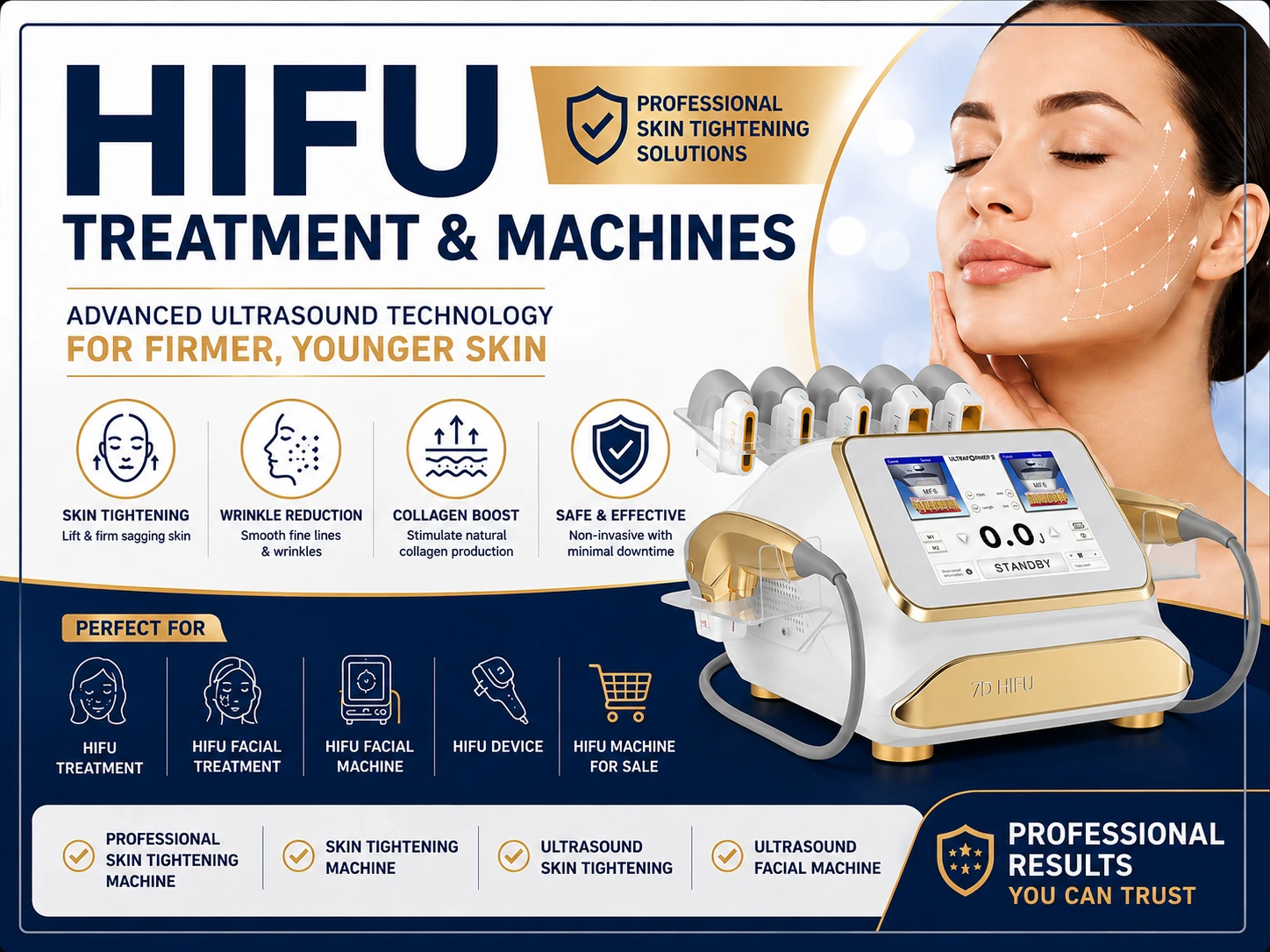
How to Choose the Best HIFU Machine for Professional Clinics
A clinic owner in Dubai once told me she almost bought a HIFU machine because it was two thousand dollars cheaper than the one her competitor down the street was using. Three months later, the transducer cartridges failed, the supplier stopped answering emails, and she was left explaining to booked patients why the “skin tightening special” was suddenly on hold. That story is more common than it should be.
HIFU machines have become one of the most requested treatments in aesthetic clinics worldwide, and for good reason. Patients want visible lifting without surgery, and clinics want a treatment that keeps people coming back. But not every HIFU machine on the market is built the same way, and the gap between a well engineered device and a cheaply assembled one only shows up after you have already paid for it.
This guide walks through what a HIFU machine actually is, what separates a professional grade unit from a bargain-bin import, and how OEM and private label partnerships fit into the picture for clinics and beauty brands that want to build something of their own.
What Is a HIFU Machine?
A HIFU machine, short for High Intensity Focused Ultrasound machine, is a medical aesthetic device that uses focused sound waves to heat tissue beneath the skin’s surface without cutting or injecting anything. It is one of the few non-surgical technologies that can reach the same structural layer surgeons address during a facelift.
How HIFU Technology Works
The device concentrates ultrasound energy into a single focal point, similar to how a magnifying glass focuses sunlight into one spot. That focal point sits below the skin, often at the SMAS layer, the same fibrous tissue layer that cosmetic surgeons tighten during surgical facelifts. When the tissue at that depth reaches a therapeutic temperature, usually between 60 and 70 degrees Celsius, it triggers a controlled thermal injury that stimulates the body’s own collagen and elastin production over the following weeks.
Because the energy is focused at a specific depth, the skin surface itself is largely untouched. That is the core reason HIFU is marketed as a non-invasive skin tightening machine rather than a surface-level treatment.
What Conditions Can HIFU Treat?
Clinics typically use HIFU for a fairly consistent set of concerns:
- Skin tightening on the face and body
- Face lifting, particularly along the cheeks and jowls
- Neck lifting and reducing a sagging jawline
- Jawline contouring for a more defined profile
- Softening wrinkles and fine lines
- General collagen stimulation as a maintenance treatment
It is worth noting that HIFU’s clinical validation is strongest for specific indications. In the United States, the FDA has cleared HIFU devices for particular uses such as brow lifting and improving lines on the neckline, while broader applications like full-face tightening are widely practiced but considered off-label. A retrospective clinical study published in NCBI’s PMC database found that combining HIFU with radiofrequency produced clinically significant skin tightening in the vast majority of patients, with only mild, temporary redness as a side effect. That kind of published evidence is exactly what buyers should be looking for before choosing a supplier or a technology platform.
Why Professional Clinics Choose HIFU Machines
Ask any clinic owner why HIFU sits on their treatment menu and you will hear some version of the same answer: it sells itself.
Benefits for Clinics
HIFU tends to carry a strong return on investment because a single session commands a premium price while the per-treatment cost stays relatively low once the machine is paid off. There is no surgery, no anesthesia, and almost no downtime, which means patients can book a lunchtime appointment and go straight back to work.
Patient demand for HIFU has grown steadily as more people search for alternatives to surgical facelifts. And because results build gradually over two to three months, clinics naturally see repeat visits and follow-up bookings, which helps with retention and recurring revenue.
Benefits for Patients
From the patient’s side, the appeal is just as clear. HIFU stimulates the body’s own collagen rather than introducing a foreign filler, so results tend to look natural rather than “done.” Results can last anywhere from six months to over a year depending on skin condition and age, and modern devices with cooling and depth control make the treatment far more comfortable than earlier generations. When performed with a properly cleared device by a trained provider, HIFU has a well documented safety profile, which matters enormously to patients who are cautious about needles or surgery.
Key Features to Look for in a HIFU Machine
This is where a lot of buyers get overwhelmed, because every supplier’s spec sheet reads like the best one on the market. Here is what genuinely matters.
Adjustable Energy Levels
A quality device lets the operator fine-tune energy output for different skin types, thicknesses, and patient tolerance. A one-size-fits-all energy setting is a red flag, not a convenience.
Multiple Treatment Cartridges
Look for machines that support several cartridge depths, typically ranging from 1.5mm for superficial skin to 13mm for deeper fat layers used in body contouring. More cartridge options mean the machine can treat a wider range of concerns, from delicate under-eye skin to the neck and body.
SMAS Precision Technology
Precision at the SMAS layer is the entire point of HIFU. Machines with tighter focal control and consistent energy delivery produce more predictable lifting results and reduce the risk of missed or uneven treatment lines.
Touchscreen Interface
An intuitive touchscreen speeds up training for new staff and reduces the chance of operator error during treatment planning.
Real-Time Monitoring
Higher end machines include visualization or monitoring features that let the operator see the tissue layer being treated, similar to diagnostic ultrasound. This adds a layer of safety and helps avoid treating the wrong depth.
Treatment Depth Options
Depth flexibility, usually somewhere between 1.5mm and 13mm across the full cartridge range, determines how versatile the machine is across face and body applications.
Safety Features
Look for automatic shutoff, energy calibration checks, and overheating protection. These features protect both the patient and the clinic’s liability exposure.
Cooling System
Cooling protects the epidermis from thermal damage while the machine delivers energy to deeper layers. Weak cooling is one of the most common causes of patient discomfort and post-treatment redness.
Treatment Speed
Faster shot delivery without sacrificing precision means shorter appointment times, which translates directly into more bookings per day.
Ergonomic Handpiece
A lightweight, well-balanced handpiece reduces operator fatigue during longer sessions, which matters more than most buyers expect once they are five treatments into a busy day.
HIFU Machine Specifications That Matter
Marketing copy aside, these are the numbers that actually predict performance.
| Specification | Why It Matters |
|---|---|
| Frequency | Determines penetration depth; lower frequencies reach deeper tissue |
| Energy Output | Affects treatment strength and how many passes are needed |
| Treatment Depth | Should cover a range from superficial dermis to deep fat |
| Shot Count | Total lifetime shots per cartridge before replacement |
| Cartridge Lifespan | Directly affects your ongoing operating cost |
| Power Consumption | Relevant for clinics running multiple devices simultaneously |
A machine with an impressive maximum energy output but a short cartridge lifespan can quietly cost a clinic more over two years than a mid-range machine with durable, high shot-count cartridges. It pays to ask suppliers for exact shot counts in writing rather than relying on verbal promises.
OEM vs ODM HIFU Machines
For clinics scaling into their own device brand, or distributors looking to bring a private label product to market, understanding the difference between OEM and ODM matters more than it might first appear.
What Is OEM Manufacturing?
Original Equipment Manufacturing means the manufacturer builds the device according to a design the buyer already has, or a design that gets customized closely around the buyer’s specifications. The buyer controls more of the branding, casing, and sometimes the software experience.
What Is ODM Manufacturing?
Original Design Manufacturing means the manufacturer already has a proven device design and the buyer essentially rebrands it under their own name. This is typically faster and cheaper to launch since the engineering work is already done.
Which Option Is Right for Your Brand?
If speed to market and lower upfront investment matter most, ODM is usually the smarter route. If you need a differentiated product with custom features for a specific market, OEM gives you more control, though it takes longer and costs more upfront. Our detailed breakdown on OEM vs ODM beauty equipment manufacturing walks through this decision in more depth if you are still weighing the two.
Certifications Every Professional HIFU Machine Should Have
Certifications are not paperwork for paperwork’s sake. They are proof that a device has been tested against recognized safety and quality benchmarks, and in many countries, they are legally required before a clinic can even use the machine.
FDA Registration
For clinics in the United States, or brands planning to export there, FDA establishment registration and device listing confirms the manufacturer and device are on record with U.S. regulators, which is a baseline requirement before commercial distribution.
CE Certification
Required for sale within the European Economic Area, CE marking confirms the device meets EU health, safety, and environmental protection standards.
ISO 13485
This is the internationally recognized quality management standard specific to medical devices. A manufacturer certified to ISO 13485 has documented, auditable processes covering design, production, and post-market monitoring, not just a one-time inspection.
RoHS
Restriction of Hazardous Substances compliance ensures the device does not contain banned levels of substances like lead or mercury in its electronic components.
IEC Standards
International Electrotechnical Commission standards, particularly around electrical safety for medical equipment, confirm the device won’t pose electrical or thermal risks to patients or staff.
MDSAP
The Medical Device Single Audit Program allows a single regulatory audit to satisfy requirements across multiple countries including the US, Canada, Australia, Japan, and Brazil, which is a strong signal of manufacturing maturity. You can see the full certification profile we maintain on our certification page.
If you want a deeper explanation of why these certifications matter beyond HIFU specifically, our article on why CE, FDA, and ISO certifications matter when buying beauty equipment covers it well.
How to Choose the Right HIFU Machine Manufacturer
The machine matters, but the manufacturer behind it matters just as much, arguably more, because that relationship determines what happens after the sale.
Manufacturing Experience
A manufacturer with a decade or more of experience in aesthetic devices has usually already worked through the engineering mistakes that newer factories are still making.
Factory Certifications
Ask for documentation, not just logos on a website. A legitimate manufacturer will have no hesitation providing certificates on request.
Research & Development
An in-house R&D team signals that the manufacturer can adapt technology, fix issues quickly, and keep pace with newer applications rather than simply reselling someone else’s design.
Global Export Experience
A manufacturer that has already navigated FDA, CE, and other regional requirements for other clients will save you significant time compared to one exporting for the first time.
OEM & Private Label Services
If there is any chance you will want your own branding down the line, confirm this capability exists before you sign anything. Learn more about how this works on our OEM and ODM services page.
Technical Support
Ask specifically how technical issues get resolved. Is there remote diagnostics? A regional service partner? Or do you ship the entire machine back overseas?
Warranty
Get the warranty terms in writing, including what is covered, what voids it, and how long parts remain available after the warranty period ends.
Training
Confirm whether operator training is included, and in what format, whether that is on-site, video-based, or documentation only.
Questions to Ask Before Buying a HIFU Machine
Before you sign a purchase order, get clear answers to these:
- Is the device clinically tested, and can they share study data or references?
- What certifications does it hold, and can you get copies?
- How long do cartridges realistically last in shot count?
- Is OEM or private label branding available if you want it later?
- What training is included with purchase?
- What is the warranty period, and what does it actually cover?
- How quickly can spare parts be delivered if something breaks?
A supplier who answers these clearly and quickly is usually a supplier worth working with. Hesitation or vague answers are worth paying attention to.
Common Mistakes When Buying a HIFU Machine
Most bad purchases share the same handful of root causes.
Choosing based only on price is the most common one, and it is almost always the most expensive mistake in the long run. Ignoring certifications comes next, often because buyers assume “it looks professional” is the same thing as “it’s certified.” Buying from unknown manufacturers with no verifiable track record leaves clinics exposed if anything goes wrong. No after-sales support turns a minor technical issue into weeks of downtime. Poor cartridge quality quietly erodes results and patient satisfaction over time. And limited treatment depth options restrict what the clinic can actually offer, forcing an upgrade sooner than expected.
Why Partner With an OEM Beauty Equipment Manufacturer?
For clinics and distributors thinking beyond a single machine purchase, partnering with an OEM manufacturer opens up a different kind of opportunity entirely.
Private Label Branding
Your clinic or brand name goes on the device, the packaging, and the marketing materials, building your own equity instead of promoting someone else’s brand.
Product Customization
From handpiece design to touchscreen software to cartridge configuration, a capable OEM partner can tailor the machine to match your specific market and patient base.
Faster Time to Market
Working with a manufacturer that already has proven platforms and existing certifications shortens the runway between decision and delivery considerably.
Lower Manufacturing Costs
Established manufacturers with scale typically offer better per-unit pricing than smaller, newer factories still building out their supply chain.
Dedicated Engineering Support
A dedicated engineering team means issues get solved by people who actually understand the platform, not a general customer service line reading from a script.
If you are exploring this path, our manufacturing capabilities page and our overview of OEM services are good starting points, or you can reach out directly through our contact page to talk through your project.
HIFU Machine vs RF Machine: Which Is Better?
This comparison comes up constantly, and the honest answer is that it depends on what the patient needs.
| Comparison | HIFU Machine | RF Machine |
|---|---|---|
| Technology | Focused ultrasound energy | Radiofrequency electrical energy |
| Treatment Depth | Reaches SMAS layer, 1.5mm to 13mm | Typically shallower, dermis-focused |
| Best Applications | Lifting, contouring, deep collagen stimulation | Surface tightening, texture, mild laxity |
| Patient Experience | More intense sensation, brief discomfort | Generally more comfortable, warming sensation |
| Treatment Duration | 30 to 90 minutes depending on area | Often shorter, 20 to 45 minutes |
| Results | Gradual over 2 to 3 months, longer lasting | Often visible sooner, may need more frequent sessions |
| Cost | Higher per session, premium positioning | Generally lower per session |
In practice, many established clinics run both, since combination protocols using HIFU and RF together have shown strong results in published research, including the Malaysian retrospective study referenced earlier. If you are still deciding between technology platforms for your clinic more broadly, our guide on choosing the best professional facial machine covers RF and other modalities in more detail.
Frequently Asked Questions
What is the best HIFU machine for professional clinics?
There is no single best machine for every clinic. The right choice depends on your patient volume, treatment menu, and budget, but the strongest candidates share adjustable energy levels, multiple cartridge depths, real FDA or CE certification, and a manufacturer with proven after-sales support.
How long do HIFU results last?
Most patients see results lasting between six months and eighteen months, depending on age, skin condition, and lifestyle factors like sun exposure. Many clinics recommend a maintenance session once a year.
Is HIFU better than RF skin tightening?
Neither is universally better. HIFU generally reaches deeper tissue and produces longer lasting lift, while RF tends to be more comfortable and works well for surface texture and mild laxity. Many clinics offer both.
What certifications should a HIFU machine have?
At minimum, look for CE certification if selling in Europe, FDA registration for the US market, ISO 13485 for quality management, and RoHS compliance. MDSAP certification is a strong additional signal of manufacturing maturity.
How often should HIFU treatments be performed?
Most protocols recommend one session every six to twelve months, since results build gradually as new collagen forms over several weeks following treatment.
Can OEM manufacturers customize HIFU machines?
Yes. Reputable OEM manufacturers can customize casing design, branding, handpiece configuration, cartridge options, and in some cases software or user interface, depending on order volume and manufacturing capability.
Is HIFU safe for all skin types?
HIFU is generally considered safe across a wide range of skin types when performed by a trained provider using a properly certified device. As with any energy-based treatment, a consultation should assess individual suitability before proceeding.
What is the average lifespan of HIFU cartridges?
Lifespan varies by manufacturer and cartridge type, typically ranging from a few hundred to several thousand shots. Always request exact shot counts in writing before purchasing.
Final Thoughts
Choosing a HIFU machine is not just an equipment decision, it is a decision about how your clinic or brand will be judged by patients for years to come. Price matters, but it should never be the only factor on the list. Technology, certifications, manufacturer reliability, and after-sales support all deserve equal weight, because a machine that breaks down without support erases whatever you saved on the purchase price.
Partnering with an experienced OEM beauty equipment manufacturer gives clinics and brands a real advantage, not just a lower price, but a foundation for long-term growth, consistent quality, and a product that patients and staff can actually trust. If you are ready to explore what that partnership could look like, our team is happy to walk through your specific requirements on a technical consultation call.