
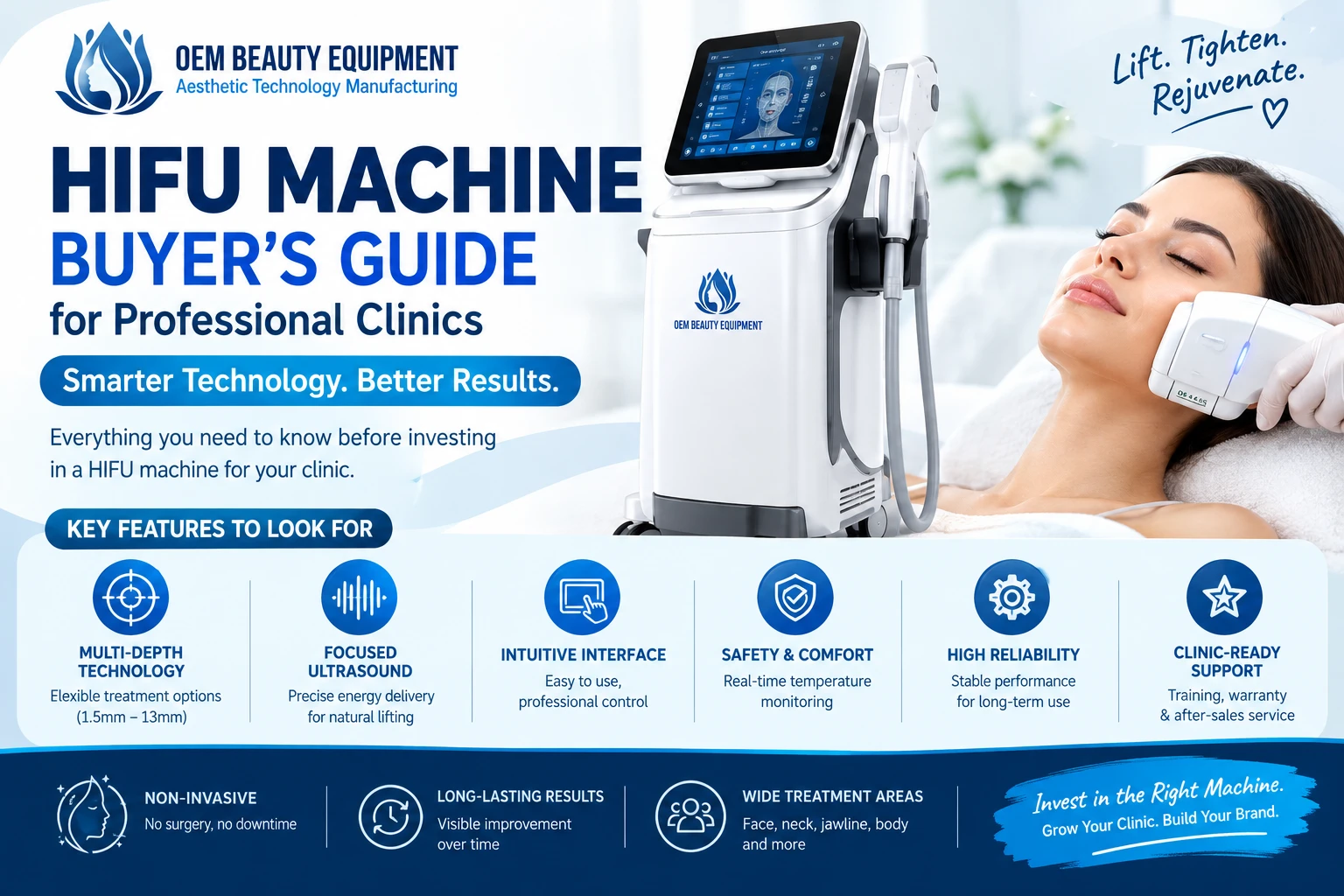
EMS Body Sculpting Machine: A Professional Buyer’s Guide for Clinics
A clinic owner in Manchester once told me she nearly wrote off EMS body sculpting entirely after her first machine left clients feeling like they’d been tapped on the stomach rather than genuinely worked out. She’d bought a low-cost unit built around old-generation electrode technology and marketed with language borrowed from far more advanced devices. It took a second, properly specified machine before she understood why the category had such a strong reputation in the first place. The technology wasn’t the problem. The machine was.
That distinction matters more in EMS body sculpting than in almost any other aesthetic category, because the term itself covers a genuinely wide range of technologies, from decades-old electrode pads to high-intensity focused electromagnetic systems capable of triggering thousands of supramaximal muscle contractions in a single thirty-minute session. Suppliers routinely blur that distinction, sometimes deliberately, sometimes because they don’t fully understand it themselves.
This guide walks through what actually separates these technologies, what a genuinely professional-grade EMS machine needs to deliver, and what to consider whether you’re equipping a single clinic or building an OEM device line around this category.
What Is an EMS Body Sculpting Machine?
EMS stands for Electrical Muscle Stimulation, and in the aesthetic context, an EMS body sculpting machine uses that stimulation to trigger repeated, intense muscle contractions that a person cannot achieve through voluntary exercise alone. The goal is muscle toning, strengthening, and definition, often marketed alongside secondary fat-reduction claims when the device combines EMS with heat-based technology like radiofrequency.
It’s worth being precise here, since “EMS body sculpting” isn’t one single technology. Traditional EMS delivers electrical current through surface electrodes to stimulate motor nerves, a decades-old approach that produces genuine but relatively shallow muscle activation. High-Intensity Focused Electromagnetic technology, commonly abbreviated HIFEM, is a more advanced and more recent approach that uses focused electromagnetic pulses to induce supramaximal muscle contractions at a depth traditional surface electrodes simply cannot reach. Emsculpt is a specific branded HIFEM device, not the underlying technology itself, similar to how CoolSculpting refers to one brand built on the broader cryolipolysis principle covered in our related guide on cryolipolysis machines.
How HIFEM Technology Works
HIFEM devices generate a focused magnetic field that induces electrical currents in the underlying motor neurons, causing the muscle to contract far more forcefully and far more frequently than it could during voluntary exercise. A single treatment session can trigger roughly twenty thousand contractions, which is well beyond what any conventional workout achieves in the same timeframe.
The clinical literature on this specific technology is genuinely substantial at this point. A study published on PubMed examining a HIFEM device for noninvasive abdominal body shaping found that the vast majority of patients reported visible improvement in abdominal appearance, with high satisfaction rates and no adverse events recorded across the treatment group. A separate narrative review and position paper published on PubMed further noted that pairing HIFEM with radiofrequency, often marketed as HIFEM+, produces a higher combined intensity of muscle stimulation and fat reduction than HIFEM alone, which is part of why so many professional devices now combine the two technologies in a single platform.
What Areas Can EMS Machines Treat?
Professional EMS body sculpting platforms are typically used for:
- Abdominal toning and core definition
- Buttock lifting and firming
- Thigh and calf muscle definition
- Arm toning
- Postpartum abdominal muscle support, including diastasis recti in appropriate cases
Coverage depends heavily on applicator design and count, which is one of the biggest differentiators between entry-level and professional-grade systems.
Why Clinics Are Adding EMS Body Sculpting to Their Menu
Non-invasive muscle toning has grown into one of the fastest-adopted categories in aesthetic medicine over the past several years, and the reasons go beyond simple trend-chasing.
Patients are drawn to it because it requires no downtime, no needles, and delivers a genuinely novel value proposition compared to older body contouring treatments, building visible muscle definition rather than only removing fat. Sessions are comfortable enough that most patients tolerate a full course without significant complaint, and results tend to appear faster than some other body contouring categories, often within a few weeks of starting a treatment series.
For clinics, EMS body sculpting pairs naturally with existing services. It’s commonly offered alongside cryolipolysis or RF-based fat reduction as part of a combined body contouring package, since muscle toning and fat reduction address genuinely different aspects of body composition rather than competing for the same patient goal. A clinic already offering the RF machines or cryolipolysis treatments covered in our other guides can often introduce EMS as a natural extension of an existing body contouring menu rather than an entirely separate service line.
There’s also a demographic advantage worth noting. Postpartum patients specifically have become a significant and growing segment of the EMS body sculpting market, since the technology’s documented effect on abdominal muscle tone has practical relevance beyond purely aesthetic goals. Clinics that position EMS thoughtfully for this audience, alongside the more general body contouring market, often find it opens a patient segment that other body contouring treatments don’t reach as naturally.
Key Features to Look for in a Professional EMS Machine
Spec sheets in this category vary enormously between genuinely professional platforms and repackaged consumer-grade technology. Here’s what actually matters.
Technology Type
Confirm whether the device uses HIFEM technology or traditional surface electrode stimulation. This single distinction affects treatment depth, intensity, and results more than almost any other spec on the sheet, and it’s exactly the detail some suppliers gloss over.
Magnetic Intensity Output
Measured in Tesla for HIFEM devices, higher intensity generally correlates with stronger, more effective muscle contractions, though intensity should be adjustable to accommodate different patient tolerance levels and treatment areas.
Applicator Count and Design
Multi-applicator systems, commonly four handles, allow simultaneous treatment of larger areas like both buttocks and both thighs in a single session, which significantly improves clinic efficiency compared to single or dual-applicator systems that require multiple passes.
Combined RF Capability
Devices pairing HIFEM with radiofrequency heating can address muscle toning and localized fat reduction in a single session, giving clinics a broader treatment offer from one platform rather than requiring a separate machine for each goal.
Real-Time Intensity and Contraction Feedback
A clear display showing current intensity level and contraction pattern helps operators adjust treatment in real time based on patient tolerance and muscle response, rather than running a fixed, unresponsive program.
Cooling System
Especially relevant for combined EMS and RF devices, adequate cooling protects the skin surface during longer or higher-intensity sessions and directly affects patient comfort.
Build Quality and Duty Cycle
Professional clinics running back-to-back appointments need a machine that maintains consistent output across a full day of use without overheating or throttling performance, which is a genuine differentiator between commercial-grade and lower-tier devices.
EMS Machine Specifications That Matter
| Specification | Why It Matters |
|---|---|
| Technology Type | HIFEM vs traditional electrode stimulation affects depth and intensity |
| Magnetic Intensity (Tesla) | Determines contraction strength; should be adjustable |
| Applicator Count | More applicators mean broader area coverage per session |
| Combined RF Capability | Adds fat-reduction alongside muscle toning in one platform |
| Session Duration | Should align with clinically studied protocols, typically 20 to 30 minutes |
| Display/Feedback | Affects operator control and treatment consistency |
| Duty Cycle | Determines reliability across a full day of clinical use |
Ask suppliers for documented Tesla output and applicator specifications in writing, rather than accepting marketing terms like “maximum intensity” without a real number attached.
Certifications Every Professional EMS Machine Should Have
Given how directly EMS technology interacts with neuromuscular tissue, certification and documented safety testing matter significantly in this category.
For clinics operating in the United States, confirm the manufacturer and device appear on FDA’s device registration and listing records, which is a baseline requirement before commercial distribution. For the European market, CE certification confirms the device has passed a conformity assessment covering safety and performance requirements. Beyond regional clearance, ISO 13485 certification confirms the manufacturer follows a documented, auditable quality management system across design, production, and post-market monitoring. You can review the certifications maintained across our device range on our certification page.
How to Choose an EMS Machine Manufacturer
The device is only half the equation. The manufacturer behind it shapes what ownership actually looks like once the machine is running full clinic days.
Manufacturing experience specifically in electromagnetic or neuromuscular stimulation technology matters, since this engineering discipline differs meaningfully from the thermal or laser-based technologies covered elsewhere in this equipment category. Ask directly how long the manufacturer has produced EMS-specific platforms, not just aesthetic equipment broadly.
In-house research and development capability signals a manufacturer that can refine applicator design, intensity calibration, and combined RF integration over successive product generations, rather than reselling a static design they don’t fully understand. Documented quality control, ideally backed by ISO 13485 certification, indicates whether consistency is engineered into every unit rather than left to chance during assembly.
Confirm the manufacturer’s technical support structure directly, since intensity calibration issues benefit far more from responsive remote diagnostics than from shipping an entire unit back overseas. Warranty terms should be confirmed in writing, and applicator availability deserves particular attention, since these are the components most likely to need replacement or servicing over the machine’s working life.
It’s also worth asking how the manufacturer tests intensity output consistency across production units, not just on a single validated prototype. Electromagnetic coil manufacturing carries real tolerances, and a factory with tight quality control will test each unit’s actual output against its rated specification before it ships. A vague answer here, or a supplier who seems surprised by the question, is worth treating as a signal to look elsewhere.
OEM EMS Machines for Clinics and Beauty Brands
For distributors, medspa groups, and beauty brands looking to build a device line rather than resell a generic unit, an OEM beauty equipment manufacturer can build EMS body sculpting systems customized around your brand on top of an already proven electromagnetic platform.
Customization typically covers housing design and color, branding and logo placement across the unit and applicators, touchscreen interface and language localization, and applicator configuration matched to your target market’s most requested treatment areas. Building on an existing, clinically supported platform significantly reduces development time and engineering risk compared to designing electromagnetic stimulation systems from scratch, while still giving your brand full ownership of the customer-facing product. If you’re weighing whether to customize an existing platform or commission a fully bespoke design, our comparison of OEM vs ODM beauty equipment manufacturing breaks down which path fits your budget and timeline.
EMS vs Other Body Contouring Technologies
EMS body sculpting rarely stands alone on a clinic’s treatment menu, since it addresses a genuinely different goal than most other body contouring technologies.
Cryolipolysis and RF-based body treatments target fat reduction and skin tightening respectively, while EMS specifically targets muscle tone and definition, which is why the three technologies pair so naturally rather than competing for the same patient objective. A patient looking to reduce a stubborn fat pocket benefits most from cryolipolysis, one looking to tighten loose skin benefits most from RF, and one looking to build visible muscle definition benefits most from EMS. Clinics offering all three, or a combined HIFEM+RF platform covering two goals at once, tend to build the most comprehensive and commercially resilient body contouring menu.
Common Mistakes When Buying an EMS Machine
Most disappointing purchases in this category trace back to a small set of recurring issues.
Not confirming whether a device uses genuine HIFEM technology versus older surface electrode stimulation is the most consequential mistake, since this single distinction affects results more than almost any other spec on a comparison sheet. Choosing based on the lowest quote without verifying documented intensity output leaves clinics with underpowered devices that fail to deliver the contraction strength patients actually notice. Skipping certification verification exposes clinics to real regulatory and safety risk. Underestimating applicator count needs limits which treatment packages a clinic can realistically offer, particularly for larger areas requiring simultaneous multi-region treatment. And overlooking after-sales technical support turns a routine calibration issue into extended downtime for what is often a genuinely high-margin service once established.
One further mistake worth flagging is underinvesting in patient education before treatment begins. Because EMS produces a very different sensation than most aesthetic treatments, an intense, rhythmic muscle contraction rather than heat or pressure, patients who don’t know what to expect sometimes assume something has gone wrong mid-session. Clinics that walk patients through the sensation beforehand tend to see better tolerance and higher course completion rates than those that skip this simple step.
Frequently Asked Questions About EMS Body Sculpting Machines
What is the difference between EMS and HIFEM technology?
Traditional EMS uses surface electrodes to stimulate motor nerves through the skin, producing relatively shallow muscle activation. HIFEM, or High-Intensity Focused Electromagnetic technology, uses focused magnetic pulses to induce much deeper, more forceful supramaximal muscle contractions that voluntary exercise cannot replicate.
Is Emsculpt the same as HIFEM?
Emsculpt is a specific branded device built on HIFEM technology, not the technology itself. Other manufacturers produce professional HIFEM-based devices under different branding using the same underlying principle.
How many EMS sessions are typically needed to see results?
Most protocols involve a series of four sessions spaced two to three days apart, with visible toning improvement often reported within a few weeks of completing the initial course.
What certifications should a professional EMS machine have?
Look for CE certification for the European market, proper FDA registration for the U.S. market, and ISO 13485 certification confirming the manufacturer’s quality management system meets recognized medical device standards.
Can EMS machines be combined with fat reduction technology?
Yes. Many professional platforms combine HIFEM with radiofrequency, sometimes marketed as HIFEM+, allowing a single device to address both muscle toning and localized fat reduction in the same session.
Can EMS body sculpting machines be customized for a private label brand?
Yes. Established OEM manufacturers can customize housing, branding, interface, and applicator configurations on proven electromagnetic platforms, allowing brands to launch a private-labeled device without engineering the underlying technology from scratch.
Final Thoughts
EMS body sculpting has earned a genuine place in professional aesthetic medicine, backed by a growing body of published clinical research rather than marketing claims alone. But as that Manchester clinic owner learned, the technology’s reputation depends entirely on the machine delivering it. Confirm whether a device uses real HIFEM technology, verify documented intensity output rather than vague marketing language, check certifications with actual paperwork, and evaluate the manufacturer’s support structure as carefully as the specifications themselves.
If you’re exploring a professional EMS body sculpting machine for your clinic, or considering an OEM partnership to build a branded device line, our team can walk through the right configuration for your treatment goals and target market. Contact us to discuss your requirements, or explore our full manufacturing capabilities to see what’s possible.