
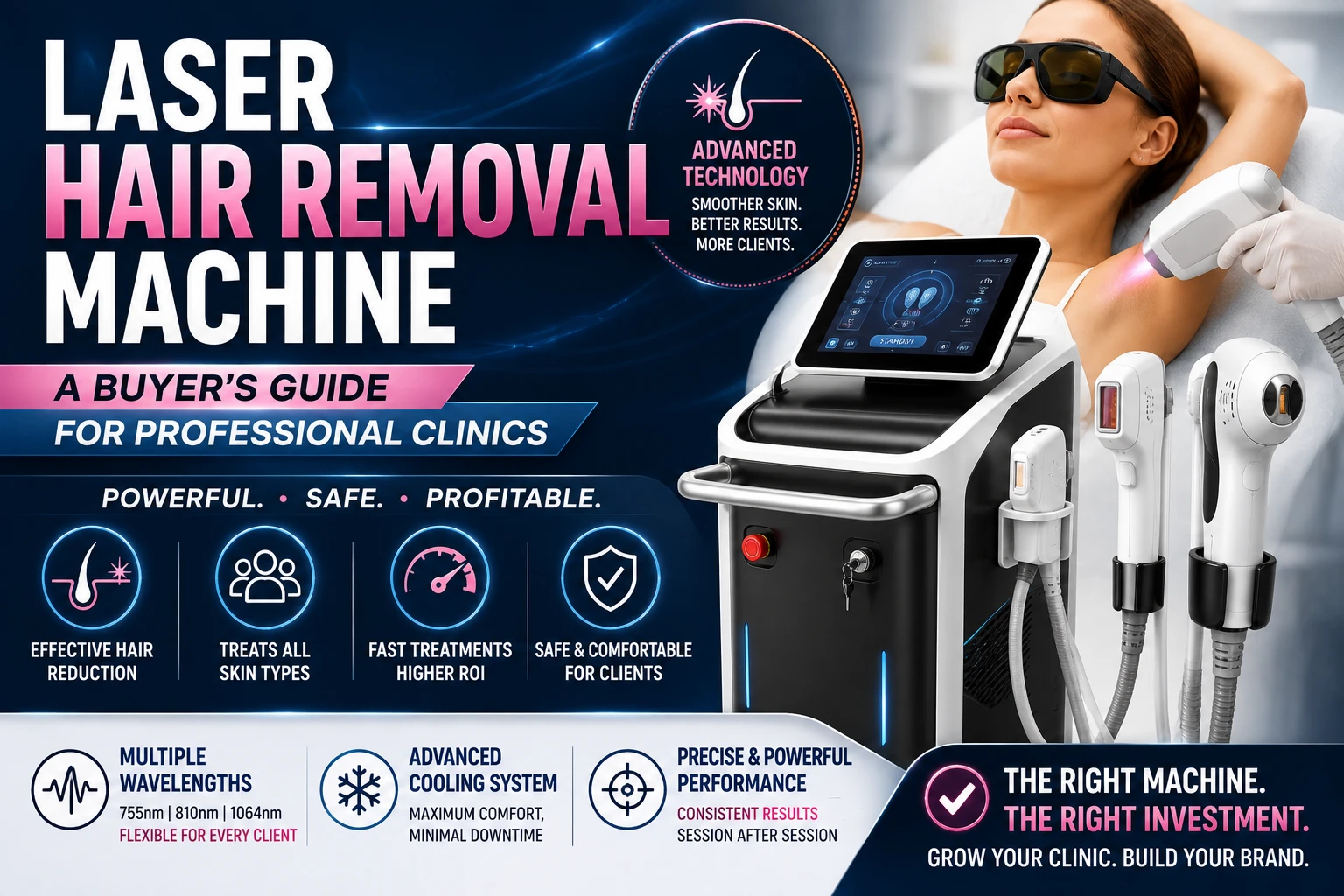
Laser Hair Removal Machine: A Buyer’s Guide for Professional Clinics
A medspa owner in Cairo told me she once sat through four different supplier demos in a single week, and every single one claimed to have “the fastest machine on the market.” By the third demo she’d stopped believing the sales pitch entirely and started asking to see the repetition rate spec sheet instead. That one habit, ignoring the pitch and reading the actual numbers, ended up saving her from a machine that would have bottlenecked her booking calendar within months.
Laser hair removal remains one of the most consistently booked treatments in aesthetic medicine, and it has been for nearly three decades now. The technology itself is mature and well understood. What separates a clinic that thrives on this service from one that struggles with it usually isn’t the treatment category, it’s the machine underneath it, and more specifically, whether that machine was built for the volume and precision a professional setting actually demands.
This guide walks through how laser hair removal machines work, what to actually check before buying one, and where OEM options fit in if you’re building a brand around this equipment rather than just running a clinic with it.
What Is a Laser Hair Removal Machine?
A laser hair removal machine is a medical device that uses concentrated light energy to target and damage hair follicles, reducing hair growth over a series of treatments. Lasers were approved by the FDA as a medical device for hair removal in the mid 1990s, and clearance for “permanent hair reduction” followed a few years later, which is why the category has such a long, well-documented safety and performance history compared to newer aesthetic technologies.
How the Technology Works
The underlying principle is called selective photothermolysis. The laser targets melanin, the pigment responsible for hair color, and converts light energy into heat at the follicle. That heat damages the follicle enough to disrupt regrowth without significantly affecting the surrounding skin, provided the wavelength, pulse duration, and cooling are properly matched to the patient’s skin and hair type.
Different laser wavelengths interact with melanin differently, which is why professional machines typically offer more than one wavelength option rather than a single fixed setting.
Common Laser Types Used in Professional Clinics
- Diode lasers (810nm): the most widely used type, offering a strong balance of speed, effectiveness, and safety across a range of skin tones
- Alexandrite lasers (755nm): generally faster and well suited to lighter skin types
- Nd:YAG lasers (1064nm): the safer option for darker skin tones since the longer wavelength bypasses more melanin in the skin’s surface
- IPL (Intense Pulsed Light) systems: which use a broader spectrum of light rather than a single wavelength, and are often positioned as a lower-cost alternative to true laser systems
Why Clinics Keep Laser Hair Removal on the Menu
Few treatment categories offer the combination of booking volume and repeat business that laser hair removal delivers.
Sessions are quick, often finishing in fifteen to twenty five minutes depending on the treatment area, which lets clinics move through a busy daily schedule without long appointment blocks. Results build progressively across a course of treatments, which means patients return every four to eight weeks for months at a time, creating dependable recurring revenue rather than a single one-off visit. The category also appeals to an unusually wide demographic, since hair removal isn’t tied to age-related aesthetic concerns the way many other treatments are, which broadens the potential patient base considerably.
There’s also a competitive dimension worth acknowledging honestly. Laser hair removal has become something of a commodity service in many markets, with heavy price competition between clinics offering similar packages. That makes machine quality and treatment consistency even more important as a differentiator, since a clinic delivering visibly better, more comfortable results with fewer sessions needed can justify pricing above the bargain-package competitors nearby, rather than getting pulled into a race to the bottom on price alone.
For clinics building a full treatment menu, laser hair removal machines also frequently pair with other services already covered in this OEM equipment category, including devices explored in our guides on HIFU machines and RF machines, giving patients a reason to book multiple services under one roof.
Key Features to Look for in a Professional Laser Hair Removal Machine
Spec sheets in this category tend to blur together fast, so here’s what actually separates a serious clinical machine from an underpowered import.
Wavelength Versatility
A single-wavelength device limits which skin tones and hair types you can safely and effectively treat. Multi-wavelength or dual-wavelength systems, commonly combining diode and Nd:YAG technology, let providers adjust treatment to the patient in front of them rather than turning certain patients away.
Repetition Rate
Measured in hertz, repetition rate determines how quickly the machine can deliver consecutive pulses. A higher repetition rate directly translates into shorter treatment times and more patients processed per day, which has a real impact on clinic throughput and profitability.
Spot Size
Larger spot sizes cover more surface area per pulse, which speeds up treatment on bigger areas like the back or legs. Smaller, more precise spot sizes matter for detail work around the face and smaller treatment zones. A versatile machine typically offers interchangeable or adjustable spot sizes rather than a single fixed applicator.
Cooling System
Integrated cooling, whether contact cooling, air cooling, or cryogen spray, protects the epidermis from heat damage and significantly improves patient comfort. Weak or absent cooling is one of the most common causes of patient dropout mid-course, since discomfort during treatment directly affects whether patients return for the next session.
Fluence and Pulse Duration Control
Full manual control over fluence, meaning energy level, and pulse duration gives providers the ability to build individualized treatment plans across the full Fitzpatrick skin type range rather than relying on a handful of rigid presets.
Build Quality and Duty Cycle
A machine’s duty cycle, essentially how much continuous use it can handle before requiring a cooldown, matters enormously in a high-volume clinic running back-to-back appointments all day. Lower-quality machines often overheat or throttle output under sustained daily use, which quietly limits how many patients you can actually treat.
This is another area where a short showroom demo tells you very little. A machine can run flawlessly for a fifteen minute demonstration and still struggle by the fourth or fifth back-to-back appointment of a real clinic day. Ask suppliers directly how the machine performs across a full eight hour shift, and if possible, ask for contact information from existing clinics running the same model at comparable volume so you can hear about real-world performance rather than a controlled demo environment.
Laser Hair Removal Machine Specifications That Matter
| Specification | Why It Matters |
|---|---|
| Wavelength(s) | Determines which skin tones and hair types can be safely treated |
| Repetition Rate (Hz) | Directly affects treatment speed and daily patient throughput |
| Spot Size | Affects coverage speed on larger treatment areas |
| Fluence Range | Determines treatment strength and customization ability |
| Pulse Duration | Affects safety and comfort across different hair thicknesses |
| Cooling Method | Protects skin and improves patient comfort |
| Duty Cycle | Determines how much continuous daily use the machine can handle |
Ask suppliers to provide these numbers directly rather than relying on marketing language like “ultra-fast” or “maximum power,” which rarely means anything specific without a real figure attached.
Certifications Every Professional Laser Hair Removal Machine Should Have
Laser devices sit under some of the strictest regulatory oversight in the aesthetic equipment category, and for good reason, given the direct interaction with skin and eyes.
In the United States, a laser hair removal device should carry proper FDA 510(k) clearance, confirming the device meets safety and performance requirements as a regulated medical laser. Laser products are also classified under a hazard classification system, and detailed safety guidelines published by Health Canada outline the classification labeling and facility safety standards that responsible laser operators should follow, regardless of which country’s regulations technically apply.
Beyond regulatory clearance, look for CE certification for the European market and ISO 13485 certification confirming the manufacturer’s quality management system meets recognized medical device standards. You can review the certifications we maintain across our device range on our certification page.
How to Choose a Laser Hair Removal Machine Manufacturer
The device is only one part of the decision. The manufacturer behind it determines what ownership actually looks like once the machine is running full clinic days.
Manufacturing experience specifically in laser-based devices matters more here than in some other aesthetic categories, since laser engineering carries tighter tolerances and higher regulatory stakes than lower-powered technologies. Ask how long the manufacturer has specifically produced laser systems, not just aesthetic equipment broadly.
Confirm what technical support looks like in practice. Laser systems occasionally need recalibration or component servicing, and a manufacturer offering responsive remote diagnostics saves significant downtime compared to shipping a full unit back overseas. Warranty terms should be confirmed in writing, spare parts availability should be verified beyond the first year of ownership, and training should cover both operation and basic safety protocols, not just how to power the machine on.
It’s also worth asking about the manufacturer’s R&D roadmap. Laser technology continues to evolve, with newer handpiece designs, improved cooling methods, and expanded wavelength combinations reaching the market on a fairly regular cycle. A manufacturer actively investing in R&D is more likely to support your device with meaningful firmware or handpiece upgrades down the line, extending its useful life well past a static launch specification.
OEM Laser Hair Removal Machines for Clinics and Beauty Brands
For distributors, medspa groups, and beauty brands looking to build a device line rather than resell generic units, an OEM beauty equipment manufacturer can build laser hair removal systems customized around your brand on top of an already proven platform.
Customization typically covers housing design and color, branding and logo placement across the device and packaging, touchscreen interface and language localization, and included handpiece or spot-size configurations. Building on an existing, certified laser platform significantly reduces development time and regulatory risk compared to engineering a laser system from scratch, while still giving your brand full control over how the product looks and feels to your end customer. If you’re deciding between customizing an existing platform versus commissioning a fully bespoke design, our comparison of OEM vs ODM beauty equipment manufacturing breaks down which path fits your budget and timeline.
Common Mistakes When Buying a Laser Hair Removal Machine
Most regrettable purchases in this category share a familiar pattern.
Choosing based on marketing language rather than actual specs, chasing vague claims like “fastest” or “most powerful” without a real repetition rate or fluence figure attached, leads to disappointment once the machine is in daily use. Ignoring wavelength versatility limits which patients a clinic can safely and effectively serve, which becomes a real problem in diverse markets. Skipping certification verification, especially FDA clearance or CE marking, exposes clinics to real legal and safety risk, not just a quality concern. Underestimating cooling requirements results in higher patient discomfort and lower course completion rates, quietly reducing the lifetime revenue of every patient who books an initial session but never returns. And overlooking duty cycle limits often surfaces only once a clinic is busy enough that the machine can’t keep pace, which is exactly the moment a slower, underpowered device becomes most expensive.
A less obvious but equally costly mistake is underinvesting in staff training on laser safety protocols. Beyond simply operating the device, staff need a clear understanding of eye protection requirements, contraindications, and how to adjust settings safely across different skin and hair types. Clinics that treat this as a box to check rather than an ongoing responsibility tend to see more adverse events and, eventually, more dissatisfied patients.
Frequently Asked Questions About Laser Hair Removal Machines
What is the best laser type for professional hair removal?
There isn’t a single best type for every clinic. Diode lasers offer a strong balance of speed and safety across most skin tones, Alexandrite tends to be faster on lighter skin, and Nd:YAG is generally the safer choice for darker skin tones. Many professional clinics choose multi-wavelength systems to serve a broader patient base with one device.
How many sessions does laser hair removal typically require?
Most patients need between six and eight sessions spaced four to eight weeks apart to see significant, longer-term hair reduction, since laser treatment only effectively targets hairs in the active growth phase.
What certifications should a laser hair removal machine have?
Look for FDA 510(k) clearance for the U.S. market, CE certification for the European market, and ISO 13485 certification confirming the manufacturer follows a recognized quality management system for medical devices.
Can laser hair removal machines be customized for a private label brand?
Yes. Established OEM manufacturers can customize housing, branding, interface, and handpiece configurations on proven laser platforms, allowing brands to launch a private-labeled device without engineering a laser system from the ground up.
What is the difference between laser hair removal and IPL?
Laser systems use a single, focused wavelength targeted specifically at melanin, while IPL uses a broader spectrum of light across multiple wavelengths. Lasers generally offer more precise, consistent results, while IPL systems are often positioned as a lower-cost alternative with somewhat less targeted output.
Is laser hair removal safe for all skin tones?
Laser hair removal can be performed safely across the Fitzpatrick skin type range when the correct wavelength, fluence, and cooling settings are matched to the patient. Darker skin tones generally require longer wavelengths, such as Nd:YAG, to reduce the risk of pigment changes or burns.
Final Thoughts
Laser hair removal has stayed a dependable, high-demand treatment category for nearly thirty years, but the machine behind that treatment still determines whether a clinic delivers consistent, comfortable results or struggles with slow throughput and inconsistent outcomes. Prioritize real specifications over marketing claims, confirm certifications with actual documentation rather than assumptions, and evaluate the manufacturer’s support structure as carefully as the device itself.
If you’re exploring a professional laser hair removal machine for your clinic, or considering an OEM partnership to build a branded device line, our team can walk through the right configuration for your treatment goals and target market. Contact us to discuss your requirements, or explore our full manufacturing capabilities to see what’s possible.