
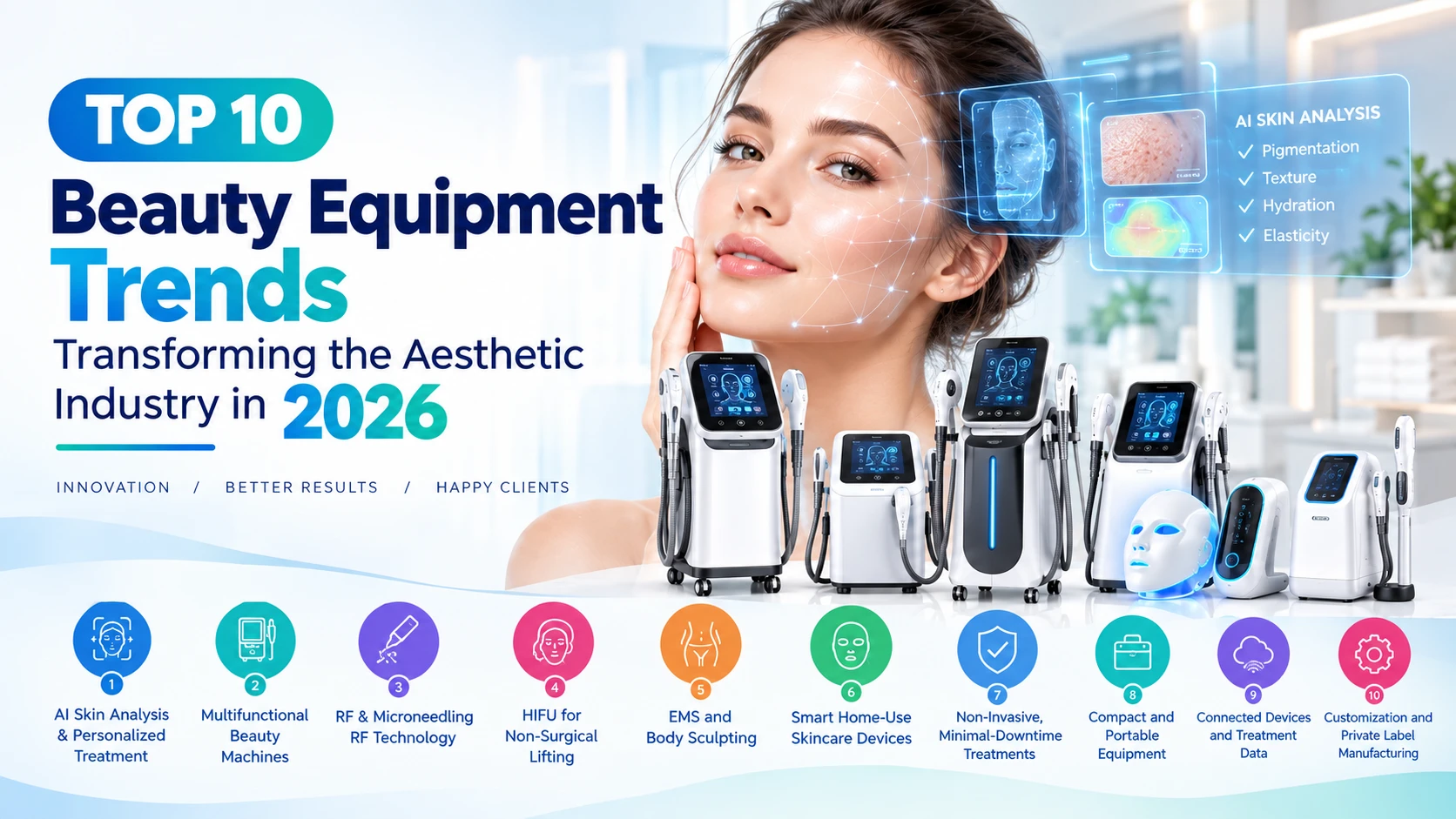
Top 10 Beauty Equipment Trends Transforming the Aesthetic Industry in 2026
Clients now expect visible results, short recovery times, and treatments tailored to their skin. Aesthetic technology is changing quickly to meet those expectations. If you run a clinic, salon, or beauty device brand, knowing the beauty equipment trends of 2026 helps you invest in machines that keep earning for years rather than ones that are outdated within months.
This guide covers ten trends shaping the aesthetic industry and what each means for buyers and brand owners.
Why Beauty Equipment Trends Matter for Your Business
Equipment is one of the biggest investments in a clinic or beauty brand. Choosing technology that matches where the market is heading affects your treatment menu, your pricing, and how long a machine stays useful. Following trends doesn’t mean buying every new device. It means understanding which technologies have lasting demand and which are hype.
The 10 Beauty Equipment Trends Shaping 2026
1. AI Skin Analysis and Personalized Treatment
AI-powered skin analysis scans the face, identifies concerns such as pigmentation, texture, and hydration, and helps practitioners build a treatment plan around the results. Clients like seeing objective data, and clinics use it to recommend treatments and track progress over time. Expect more machines to ship with built-in imaging and analysis software.
2. Multifunctional Beauty Machines
Instead of buying several single-purpose devices, many clinics prefer one platform that combines functions such as hydro-cleansing, RF, LED, and ultrasound. Multifunctional machines save space and give you more services from one investment. When comparing them, check that each module is properly engineered rather than just added to lengthen the feature list. Our guide to choosing a professional facial machine explains what to look for.
3. RF and Microneedling RF Technology
RF technology for beauty treatments uses radiofrequency energy to heat the deeper layers of skin, and it remains popular for firming, tightening, and skin rejuvenation. Fractional and microneedling RF systems are growing because they target texture and laxity with controlled downtime. Buyers should look at handpiece options, depth control, and safety features.
4. HIFU for Non-Surgical Lifting
A HIFU machine uses focused ultrasound to target specific depths beneath the skin, and it’s widely used for face and neck lifting. Demand continues because clients want an alternative to surgery. Cartridge quality and consistent energy delivery matter here, so ask manufacturers for technical documentation.
5. EMS and Body Sculpting
EMS body sculpting devices use electrical muscle stimulation to help tone and strengthen muscle. Body contouring remains a growing service category, and clinics often pair EMS with other technologies such as RF for a more complete offering.
6. Smart Home-Use Skincare Devices
Home-use beauty devices, including LED masks, microcurrent tools, and cleansing devices, keep growing as consumers build professional-style routines at home. This creates opportunities for brands, and for clinics that sell devices as retail extras. Safety, clear instructions, and proper certification matter more than ever for home-use products.
7. Non-Invasive, Minimal-Downtime Treatments
Many clients want results without weeks of recovery. Non-invasive aesthetic treatments fit that demand, which is why technologies such as RF, HIFU, and LED continue to grow. Clinics that can explain comfort, downtime, and expected results clearly tend to convert more consultations.
8. Compact and Portable Equipment
Smaller clinics, mobile practitioners, and home studios need machines that don’t take much space. Compact designs, lighter handpieces, and easier setup are becoming selling points, especially for new business owners.
9. Connected Devices and Treatment Data
Some newer machines connect to apps or cloud platforms so practitioners can store client records, treatment settings, and results. This supports consistency across staff and locations, and it gives clients a clearer picture of their progress.
10. Customization and Private Label Manufacturing
More brands are launching their own device lines, either through custom design or by rebranding proven models. Understanding OEM vs ODM beauty equipment helps you pick the route that fits your budget and timeline.
Quick Comparison: Which Trend Fits Your Business?
| Trend | Best for | Key thing to check |
|---|---|---|
| AI skin analysis | Clinics wanting data-led consultations | Software accuracy and updates |
| Multifunctional machines | Small to mid-size clinics | Quality of each module |
| RF / microneedling RF | Skin tightening and texture services | Handpiece options, safety controls |
| HIFU | Non-surgical lifting services | Cartridge quality, energy consistency |
| EMS body sculpting | Body contouring menus | Applicator design and intensity control |
| Home-use devices | Brands and retail add-ons | Certifications and safety |
| Private label | Brand owners and distributors | MOQ, tooling, IP ownership |
How to Choose the Right Technology for Your Clinic or Brand
Start with Your Clients, Not the Hype
Look at which services your clients already ask about. A technology with strong demand in your area is a safer purchase than one that’s simply new.
Verify Certifications Before You Buy
Confirm that the machine holds the certifications your market requires, such as CE, FDA, and ISO, and that they apply to the exact model. See why CE, FDA, and ISO certifications matter for a checklist.
Plan for Training, Support, and Spare Parts
A good machine needs good support. Ask about operator training, warranty terms, and how quickly handpieces and consumables can be supplied.
Frequently Asked Questions
What are the biggest beauty equipment trends in 2026?
The main themes are AI-assisted skin analysis, multifunctional platforms, RF and HIFU technologies, EMS body sculpting, smart home-use devices, and a shift toward non-invasive, low-downtime treatments.
Is HIFU still popular in 2026?
Yes. Clients still look for non-surgical lifting, and HIFU remains a common choice. Results and safety depend heavily on device quality and practitioner training.
Are multifunctional beauty machines worth buying?
They can be, especially for smaller clinics that want several services from one device. Check that each function is well built and that the manufacturer provides proper support.
Can I launch my own beauty device brand?
Yes, many brands do this through OEM or ODM manufacturing. Confirm certifications, MOQs, and intellectual property terms before committing.
Conclusion: Invest in Technology With Staying Power
The strongest beauty equipment trends of 2026 share a few themes: personalization, minimal downtime, versatility, and proven safety. Choose technology that matches your clients’ needs, comes from a manufacturer you can verify, and is backed by proper certification and support.
Looking for a manufacturing partner for your next device line? Contact our team for product details, samples, and a quote.