OEM Beauty Products: How Cosmetics Manufacturing Works
Most beauty brands on the market today, from established names to independent startups, don’t manufacture their own products. Instead, they work with a cosmetics factory that handles formulation, production, and packaging, while the brand focuses on marketing and sales. This is the world of OEM beauty products, and understanding how it works is the first step to launching or scaling a skincare or cosmetics line.
What Does OEM Mean in Beauty Products?
OEM stands for Original Equipment Manufacturer, though in the cosmetics world, it more accurately describes a factory that manufactures OEM beauty products to a brand’s specifications. You bring the formula, packaging requirements, and branding, and the factory produces the finished product.
This differs from simply reselling someone else’s product. With true OEM, you have more control over the formulation and ingredients, even if you’re not doing the chemistry yourself.
What Is OEM ODM in Cosmetics?
The term OEM ODM is often used together because many cosmetics factories offer both models, and brands frequently move between them as they grow.
OEM (Original Equipment Manufacturer): You provide the formula or detailed specifications, and the factory produces it.
ODM (Original Design Manufacturer): The factory already has a formula developed in-house, and you customize branding, packaging, and sometimes minor formula adjustments.
Which Model Should You Choose?
| Factor | OEM | ODM |
|---|---|---|
| Formula origin | Your own or custom-developed | Factory's existing formula |
| Development time | Longer | Shorter |
| Upfront cost | Higher | Lower |
| Product uniqueness | High | Limited, shared with other brands |
| Best for | Brands with a specific formula vision | Brands wanting to launch quickly |
Many new brands start with ODM to get to market faster, then move to OEM once they understand their customer base and want a more differentiated product.
What Are OEM Cosmetics and OEM Skincare?
OEM cosmetics and OEM skincare refer to the same manufacturing model applied to specific product categories. OEM skincare might include serums, moisturizers, cleansers, and masks, while OEM cosmetics typically covers color cosmetics like foundation, lipstick, and eyeshadow. Some factories specialize in one category, while others handle both.
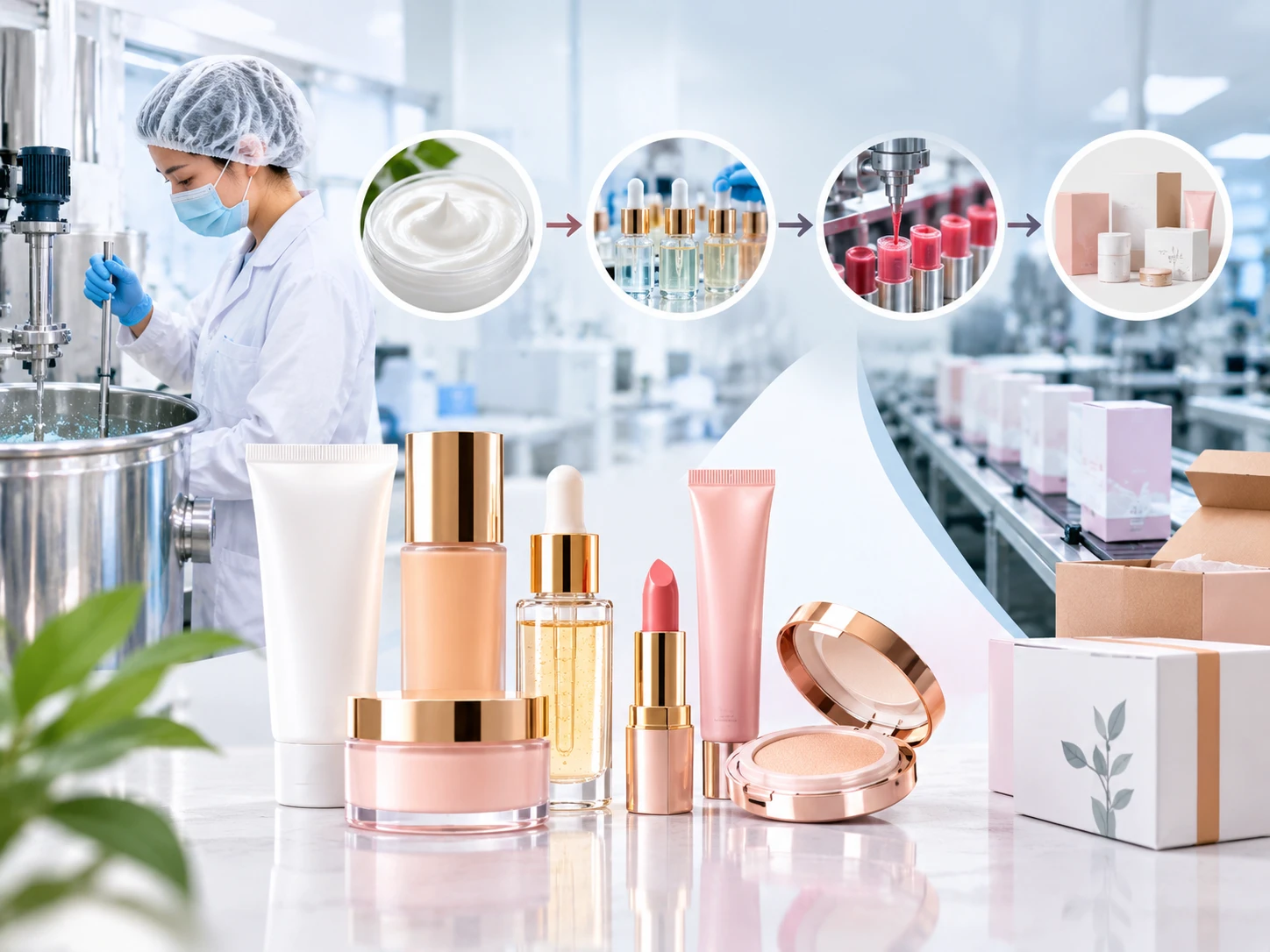
How OEM Products Are Made: The Process
Understanding how OEM products move from concept to shelf helps you plan realistic timelines and ask better questions of potential manufacturers.
1. Concept and Formula Selection
You decide what you want to make, your target ingredients, texture, and positioning, then either submit your own formula or choose from the factory’s existing options under an ODM arrangement.
2. Sampling and Formula Adjustment
The factory produces samples based on your specifications. This stage often involves several rounds of feedback and adjustment before the formula is finalized.
3. Packaging and Branding
You select or design packaging, labels, and branding elements. Some factories offer in-house packaging options, while others expect you to source packaging separately.
4. Regulatory and Compliance Review
Depending on your target market, the product may need to meet specific regulatory requirements, such as ingredient restrictions, labeling rules, or safety testing.
5. Bulk Production
Once the formula, packaging, and compliance are finalized, the factory moves into bulk production based on your order quantity.
6. Quality Control and Shipping
Finished products go through quality checks before packing and shipping to you or directly to your distribution point.
How to Choose a Reliable Cosmetics Factory
Not every cosmetics factory operates the same way, and choosing the wrong one can mean inconsistent quality, missed deadlines, or compliance problems down the line.
Check Their Manufacturing Capabilities
Confirm the factory actually produces the type of product you need; a factory specializing in skincare serums may not be the best fit for color cosmetics, and vice versa.
Ask About Certifications and Compliance
Request documentation relevant to your target market, such as GMP (Good Manufacturing Practice) certification, and confirm the factory can support the regulatory requirements of the countries where you plan to sell.
Request Samples Before Committing
Always test a physical sample before placing a bulk order. Photos and descriptions don’t tell you how a product actually feels, performs, or holds up over time.
Understand MOQ and Pricing
Minimum order quantities and pricing vary significantly between factories and depend on whether you’re using OEM or ODM. Get clear numbers in writing before committing.
Ask About Timeline and Communication
Development timelines for OEM products can take weeks to months depending on formula complexity. Clear, responsive communication during this stage is often a good predictor of how the relationship will go long-term.
Frequently Asked Questions
What does OEM mean for beauty products?
OEM means the manufacturer produces beauty products to your specifications or formula, as opposed to you developing and running your own factory.
What's the difference between OEM and ODM in cosmetics?
OEM uses your own formula or detailed specifications, while ODM uses the factory’s existing formula, which you customize with your own branding and packaging.
How do I find a reliable cosmetics factory?
Check their manufacturing capabilities, ask for relevant certifications, request samples before committing, and get MOQ and pricing details in writing.
Can I create my own skincare line without a lab?
Yes. Most OEM and ODM cosmetics factories handle formulation and production, so you don’t need your own lab or chemistry background to launch a skincare or cosmetics line.
What is the minimum order quantity for OEM beauty products?
MOQ varies significantly by factory, product type, and whether you’re developing a custom formula or using an existing one. Confirm this directly with any manufacturer you’re considering.
Conclusion
OEM and ODM manufacturing give beauty entrepreneurs a path to market without needing to build a factory or formulation lab of their own. The right choice between OEM and ODM, and the right cosmetics factory partner, depends on your budget, timeline, and how differentiated you want your product to be.